Here's the thing about this conversation
Most people think bringing a lemon vibrator or clitoral vibrator into a new relationship signals something wrong. Your partner reads it as "they're not satisfied," and you read their hesitation as "they don't want me to feel good." Both are stories you're making up. The actual reality is simpler: you're just introducing a tool that works.
I've worked with hundreds of couples navigating this exact moment, and I can tell you that the ones who move through it smoothly aren't the ones with perfect communication skills. They're the ones who stop overthinking and just frame it like an adult.
Why you're nervous (and why it doesn't matter)
Let's name it first. You're worried about a few things: that they'll take it personally, that it'll kill the mood, that they'll think you're bored. Reasonable worries. But here's what I know from two decades of relationship work: the anxiety you feel before the conversation is always worse than the conversation itself.
New relationships are in a fragile spot. There's still mystery, still something to prove. A lemon vibrator feels like evidence that something's missing. It's not. It's evidence that you know your own pleasure and you're willing to include them in it.
That's actually deeply attractive, if you frame it right.
The timing piece (more important than you think)
Don't have this conversation during sex. Don't have it right before sex either. Have it when you're both relaxed, clothed, and genuinely open. This might be a coffee afternoon, a car ride, or lying in bed after you've already had sex once and there's no performance pressure.
The worst time is when there's tension already brewing. If you're annoyed they haven't made you orgasm yet, or you're feeling disconnected, bringing up a clitoral vibrator now reads as criticism. It'll land like "I need this because you're not enough." Wait for calm.
The best time is when there's already intimacy and trust building. After you've had good sex. After they've said something tender. After you genuinely feel like they're present and interested in you. That's your opening.
What to actually say (no scripts, just real language)
You don't need flowery words. You need honesty and specificity.
"I've been thinking about trying a lemon vibrator. I know you're new to this, so I wanted to talk about it first rather than just springing it on you. But I really want to explore it, and I'd love if you'd be into that with me."
Notice what's happening here: you're naming the thing, you're acknowledging their newness to it without making it weird, you're being clear about what you want, and you're inviting them in. You're not asking permission. You're not positioning it as mandatory. You're offering partnership.
If they hesitate, don't go defensive. Ask why. "What's making you nervous?" usually uncovers that they think it means they're not enough, or they think they're doing something wrong, or they've just never seen one before and it feels foreign.
Then you can actually address the real worry instead of talking past each other.
What to say if they say no
Some people will be uncomfortable. That's real. And it's worth taking seriously, but not taking as final.
If your partner says "I don't like the idea," the question is whether this is a hard boundary or just unfamiliarity. "Is this something you're never going to want to try, or is it just feeling new right now?" There's a big difference.
If it's genuine discomfort, you have a choice. You can accept that as a boundary in this relationship, or you can recognize that sexual incompatibility might matter more than you're willing to admit. Both are valid. I just want you to know which conversation you're actually having.
Most of the time, it's unfamiliarity. People warm up when they understand it's not a replacement for them, it's an addition. Many partners become genuinely excited once they realize it means you'll be more satisfied, more present, potentially more orgasmic. Those things benefit both of you.
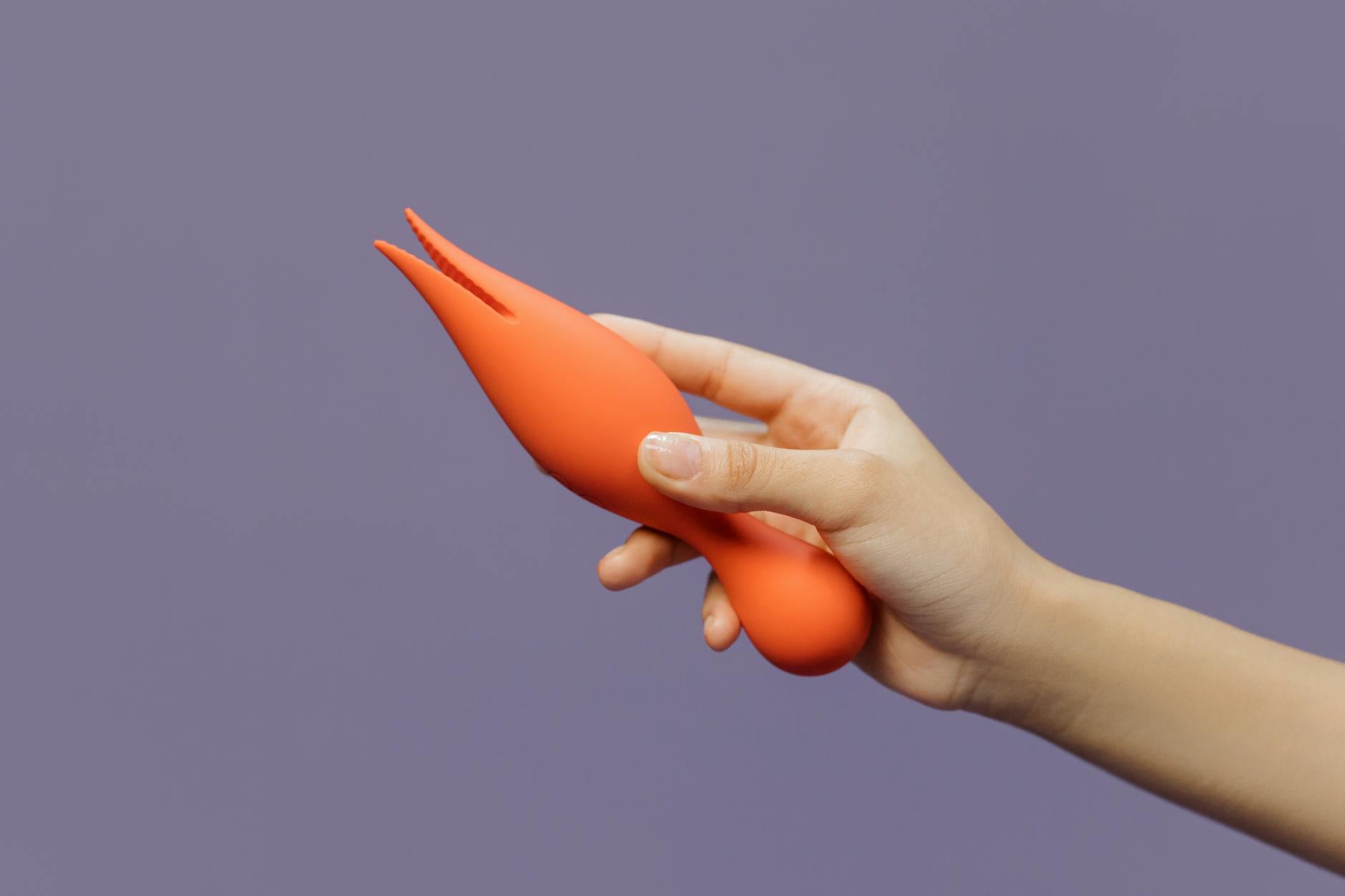
Photo by cottonbro studio on Pexels
Why lemon vibrators specifically invite less resistance
Lemon clitoral vibrators and other clitoral suction toys have a specific advantage in these conversations. They're external. They're not replacing penetration or a partner's involvement. If anything, they invite participation.
Many partners find that using a lemon vibrator during partnered sex actually deepens the connection. You're focusing on clitoral pleasure instead of penetration, so there's often more room for kissing, eye contact, and other kinds of intimacy. It changes the sex in ways that feel connecting, not isolating.
If they're still hesitant, you might say: "I want to be more orgasmic when we're together. Using a lemon vibrator could actually make that happen. That means better sex for both of us."
That's not a lie. It's usually true.
The actual first time
Don't make it a huge production. Don't announce it like you're unveiling a surprise. Just have it there, casually present it when things are heating up, and ask if they want to see how it works.
Let them hold it. Let them see it. Demystification is the fastest way to comfort. Once someone has touched a toy and pressed a button, it stops being terrifying.
If you're using one from Hello Nancy like a lemon vibrator or clitoral suction toy, show them the patterns, explain that you can control the intensity, demonstrate how it feels on your arm first. Normalize it the way you would a shower massager or any other tool.
Then use it on yourself while they're involved. You direct it. You control it. They watch, and eventually they touch you, and it becomes collaborative instead of scary.
What if they want to try using it on you?
This is actually the dream scenario. If they ask to try, let them. Guide them. Tell them what feels good. This is where connection deepens because you're both paying attention to your pleasure together.
Some partners become obsessed with helping you have better orgasms once they see how a lemon vibrator works. That's not a bug, that's a feature.
The longer-term perspective
Introducing a clitoral vibrator early in a relationship is actually a gift. You're modeling that you know your body, you're not ashamed of pleasure, and you're willing to be honest about what you need. Those are qualities that build stronger partnerships over time.
Partners who can't handle that are sorting themselves out for you. And partners who embrace it are showing you they care more about your satisfaction than their ego. That matters. That's the kind of person you want in the long term.
Right now it feels monumental. In six months, it'll just be part of what you do together. And that's when you'll realize the hardest part wasn't the vibrator. It was saying what you actually wanted.
People also ask
Should I wait until we're more serious to introduce a vibrator?
Not necessarily. Early-stage relationships are actually the best time because there's less history to rewrite. You're not introducing change; you're introducing your baseline. That said, wait until there's some comfort and trust. Not the second date, but once you've had good sex a few times and there's genuine interest.
What if they think I'm hinting that they're bad in bed?
That's the most common fear, and it's usually the opposite. People who want to expand pleasure are usually people who feel secure enough to be honest. Frame it as curiosity and self-knowledge, not criticism. "I'm really into exploring different sensations" is different from "you're not doing it right." One is about discovery. One is about blame.
Can I use a lemon vibrator or clitoral suction toy with a partner who's never seen one before?
Absolutely. New partners are often curious and open. The key is framing it as exploration together, not as something you need to compensate for them. Most people find it sexy when their partner knows what they want and isn't apologetic about it.
What if they want to use it on themselves?
That's fair and fine. Clitoral vibrators and lemon adult toys can absolutely be shared or used by either partner. If that's where the comfort is, start there. Eventually the dynamic might shift once they see how good you feel.
Is there a "best" lemon vibrator or clitoral vibrator to start with for a new partner?
Yes and no. Something intuitive and not too intense works best. You don't want settings that require a manual or patterns that are jarring. You want something that feels obvious and pleasant. Hello Nancy's lemon vibrators are designed with that in mind. Start there if you're looking for a low-pressure introduction.
How do I bring this up if we haven't talked about sex much yet?
Carefully, but honestly. "I really enjoy sex with you, and I'm curious about exploring more together. I've been thinking about trying a clitoral vibrator. Would you be open to that?" You're separating "I like you" from "I want to experiment," which makes it less threatening and more collaborative.
The real takeaway
Introducing a lemon vibrator or any clitoral toy to a new partner isn't about fixing anything. It's about sharing your pleasure and inviting them into your desires. The conversation is the brave part. The actual toy is just the follow-through.
You deserve a partner who gets that. And you deserve to feel good without apologizing for it. Start there.
If you're looking for more on communication and partnership, I've written about how lemon vibrators and clitoral suction toys can deepen intimacy in best lemon vibrator for couples, and there's also thoughtful guidance on how to use a lemon vibrator if you're new to clitoral suction that might help you both feel more confident. Both might be worth reading before you have the conversation, just so you feel grounded in the details.