
Let's be honest about the awkwardness
Introducing a lemon vibrator or any clitoral vibrator into partnered sex feels like you're handing your partner a report card that says "what we've been doing hasn't been enough." That's the thought that stops most people cold. And honestly, it's the exact opposite of what's actually happening. You're not critiquing. You're opening a door.
But I get it. Vulnerability during sex is already intense. Adding a new object and a conversation about pleasure on top of that can feel like too much exposure at once. Here's the thing though: the exposure you're dreading often doesn't show up if you handle the introduction the right way.
What's really going on underneath the self-consciousness
There are usually three things tangled together when someone feels exposed about using a vibrator with a partner. First, there's the fear that your partner will feel inadequate. "If she needs this, am I not enough?" Second, there's the cultural messaging that's been living in your brain since adolescence: good sex should be spontaneous and anatomically simple. Anything else feels like cheating or like you're broken. Third, there's the very real vulnerability of asking for what you actually want in a sexual context, which many of us were never taught how to do.
None of those things get solved by just powering through and using the vibrator anyway. They need a conversation first.
How to frame it before you introduce it
The framing matters more than the object itself. Here's what works:
Start outside the bedroom. Not during foreplay, not right before sex, not in bed. Start with tea or a walk or any moment that feels low-stakes. The conversation is easier when there's zero sexual pressure.
Lead with your desire, not the problem. Don't say, "I'm having trouble orgasming and I think I need a toy." Say, "I've been thinking about what I actually enjoy during sex, and I'd like to try something that feels really good to me. I want to show you what works for my body."
That shift is everything. You're not saying you're broken. You're saying you're curious and you want him or her or them to be part of discovering that.
Normalize it as something you're exploring, not something you need from them. "I want to use a clitoral vibrator during partnered sex because I like how it feels. I want to show you what gets me there." This is wildly different from "I can't come without a vibrator." One is invitation. One is demand.
Acknowledge that it might feel new for them, and that's okay. "This might feel awkward at first, and that's normal. We can go slow. I'm not worried about it, and I don't want you to be either."
The actual introduction: what to do
Once you've had the conversation and your partner is on board, here's how to make the first experience feel natural instead of clinical:
Start with a low-pressure scenario. Not a night you've been planning for weeks. Not a moment with maximum expectations. Maybe it's a lazy Sunday afternoon kind of situation where sex happens but there's no performance pressure attached.
Introduce it during foreplay, not as the main event. Use the vibrator yourself while your partner is involved. You're not replacing them. You're adding something that makes the experience better for both of you. Many partners actually find it incredibly hot to watch someone they care about discovering their own pleasure.
Let your partner see and understand what you're doing. There's something about the mystery that can feel weird. But when someone understands "oh, you're using that on your clitoris to build arousal faster," it becomes practical instead of threatening. They might even become curious about how it works.
Don't make it bigger than it is. Use a lemon vibrator, enjoy it, continue with partnered sex, finish together, and then just move on with your day. The more you treat it as a normal part of your sexual repertoire, the faster it becomes normal.
Handling resistance or discomfort from your partner
Sometimes someone says yes and then during the actual moment, you pick up on hesitation. That happens. Here's what it usually means and how to handle it.
"That's cool, but can I do it for you instead?" This is often about maintaining control or feeling needed. You can absolutely hand it over if you want to, but you can also gently redirect: "I like using it myself so I can show you exactly what feels good. Maybe next time we can play with you using it on me if you want to try." Collaboration over surrender.
Visible discomfort or quiet withdrawal. Sometimes a partner needs more time to adjust to the idea than a conversation provides. That's legitimate. You can pause and ask directly: "Talk to me. What's coming up for you?" Often it's that shame about inadequacy. Often it's just visual shock at seeing a new object in bed. Stay curious instead of defensive.
Outright rejection. This is rarer but it happens. If someone refuses after the conversation and the explanation, you're actually looking at a deeper incompatibility around pleasure and autonomy. That's worth exploring together, maybe with a couples therapist, because it usually points to bigger relationship dynamics at play.
Why clitoral vibrators change everything (and how to explain it)
Here's something that helps a lot of partners understand: most people with vulvas need clitoral stimulation to orgasm reliably during partnered sex. Not always, but statistically more often than not. A vibrator isn't a luxury. It's often the actual pathway to what everyone wants anyway. Orgasm, connection, mutual satisfaction.
When you frame it that way, introducing a lemon vibrator becomes less "I need something you can't give me" and more "here's the tool that helps us both get what we want." That's a conversation a partner can get behind.
The feelings afterward
Here's what often happens: you use the vibrator with your partner, it goes fine, maybe even great, and then afterward you feel oddly exposed or vulnerable. That's worth knowing in advance. You just showed someone an intimate detail about your body and your pleasure. Some vulnerability hangs around after that, even if it went well.
Talk about it if you need to. "That felt vulnerable but good." "I appreciate that you were open to trying something new." Sometimes the conversation after is as important as the introduction itself.
When the real work is bigger than one conversation
I'll be real with you: if you feel chronically exposed or ashamed about your sexuality in the relationship, using a vibrator alone won't fix that. That's worth exploring separately, whether that's solo or with your partner. Shame about pleasure doesn't usually live in isolation. It often connects to how you were taught to think about your body, your sexuality, and what you deserve.
If you're rebuilding intimacy with a longtime partner after years of disconnection, introducing a vibrator is actually a great tool for that rebuild. It forces a conversation. It requires vulnerability. It creates novelty. All of those things help couples reconnect.
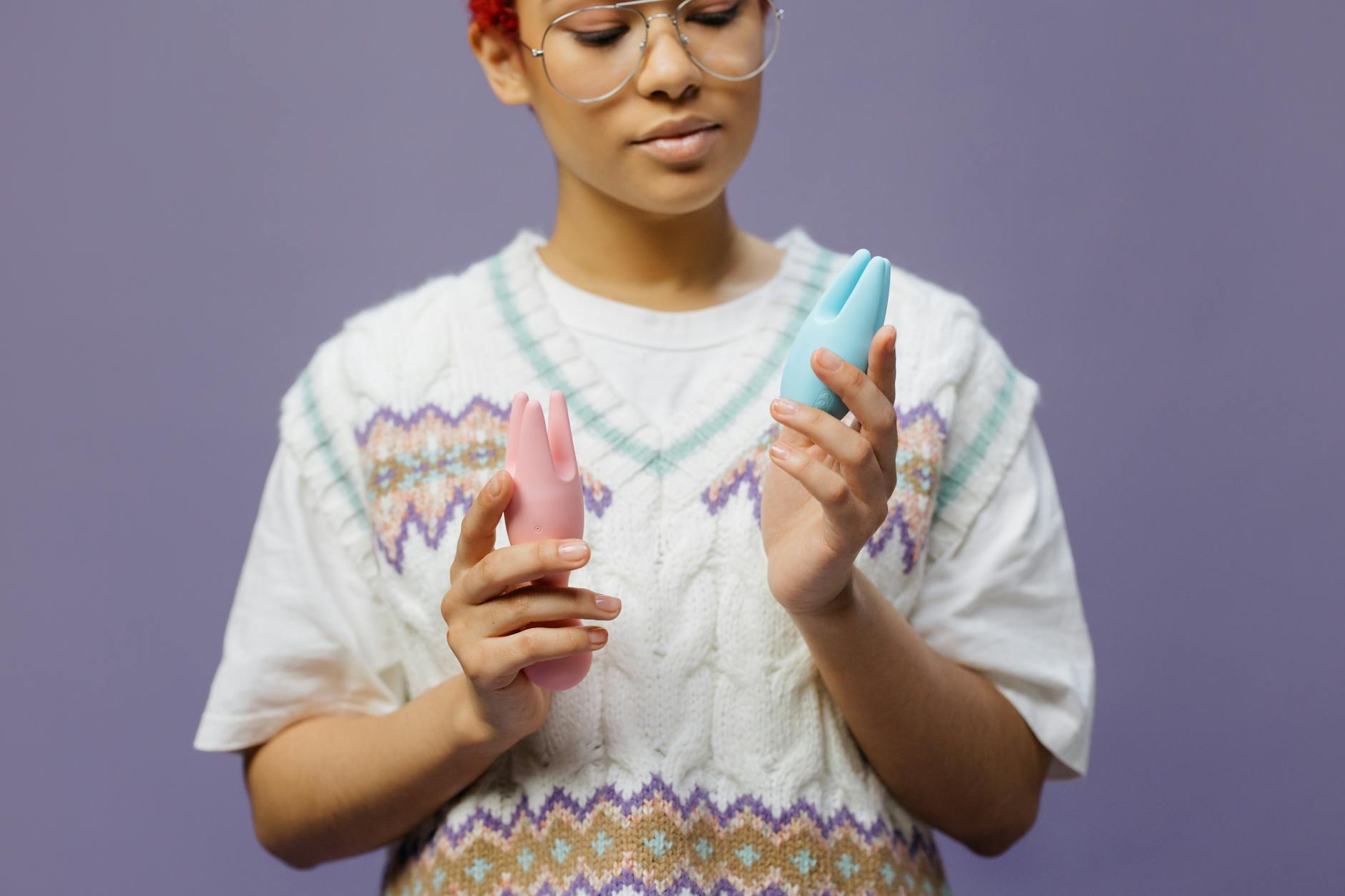
Photo by cottonbro studio on Pexels
The real win here
Introducing a lemon clitoral vibrator to partnered play isn't actually about the vibrator. It's about claiming your pleasure as something that matters. It's about communicating what you actually want instead of performing what you think you should want. It's about expanding the conversation between you and your partner beyond what's automatic.
Yes, that requires vulnerability. Yes, it requires a conversation that might feel awkward. But the alternative is continuing to have sex in a way that doesn't fully work for you and hoping no one notices. That's a lonelier thing to live with.
You deserve partnered sex that includes your actual pleasure. Not as an afterthought. Not as something you apologize for. As the center of it.
Common questions about using vibrators with partners
Will my partner feel threatened by a vibrator during sex?
Most partners don't. Some initially do, but that usually comes from misinformation rather than reality. When someone understands that a vibrator helps you access pleasure more reliably, most partners actually find it hot. They like knowing what works for you. They like being let in on that information. What feels threatening is mystery and the sense of being excluded. But if you're using the vibrator because you want to share something about your pleasure with them, that's an invitation, not a rejection.
Is it normal to feel vulnerable using a vibrator with someone new?
Completely normal. You're essentially saying, "Here's something intimate about what my body needs." That's exposure. But exposure is actually how trust gets built. If your partner can see that about you and respond with curiosity instead of judgment, that's a meaningful thing. And if they respond with judgment, that's useful information about whether this is the right person to be intimate with.
How do I know if using a vibrator is right for my relationship?
If you want to use one, it's right for your relationship. That's actually the only criteria. The question isn't whether it's "right" in some objective sense. The question is whether it's something you want to explore. If it is, your partner gets to decide whether they're willing to try it. If they're not, you get to decide what that means for you.
Can using a vibrator with a partner actually improve our sex life?
Yes, often dramatically. Not because the vibrator itself is magic, but because of what using it requires. It requires communication. It requires vulnerability. It requires being honest about what you actually want instead of what you think you should want. All of those things are the foundation of good partnered sex. The vibrator is just the vehicle.
What if I want to use the vibrator but my partner doesn't want to be involved?
That's worth talking about directly. Sometimes a partner doesn't want to be present during masturbation or solo exploration, and that's their boundary. You can use a vibrator for solo play on your own time. But if your partner doesn't want to be present during partnered sex when you use one, that's a different conversation. That's about whether they're willing to support your pleasure during the time you spend together sexually.
How do I bring this up if we've never talked about toys before?
Start small and start outside the bedroom. You don't need a formal sit-down. You can say, "I've been thinking about trying a vibrator during sex. I'd like to introduce it when you're comfortable." That's it. You're not asking permission. You're giving a heads-up and inviting collaboration. Then follow up with the actual introduction when the moment feels right. The conversation doesn't need to be long or complicated. It just needs to happen before it shows up in bed.
The real thing underneath all of this
Using a lemon vibrator with a partner isn't about needing something external to make sex work. It's about deciding that your pleasure matters enough to be honest about what gets you there. That's a decision about your own agency, not about the toy itself. Some partners will be immediately on board. Some will need time. Some will never be comfortable. Whatever your partner's response is, you get to decide what that means for what you want moving forward.
Your pleasure isn't something to apologize for. It's something to claim.
Have questions about navigating this in your specific situation? Reach out to us. We're here to help.