The shift nobody warns you about
Somewhere around your late 30s or early 40s, you might notice your body lubricates differently during sex or solo play. It's not that you're less aroused. Your brain is still interested, your clitoris is still responsive, but the amount of natural fluid your body produces has shifted. And for a lot of people, that feels like a small betrayal.
It's not. It's just biology. But it does change how you approach pleasure, and specifically, how you choose toys that work with your body instead of against it. This matters more than most articles acknowledge.
Why lubrication actually changes as you age
Your body's ability to produce vaginal lubrication depends on blood flow, hydration, and estrogen levels. As you get older, all three of those factors gradually shift. Estrogen drops (whether you're perimenopausal, menopausal, or just aging naturally—it happens to everyone). Blood flow to pelvic tissues becomes less efficient. And dehydration, even mild, affects everything from your skin to your sexual response.
The result: your body produces less abundant natural lubrication, and it might produce it more slowly. The tissue of your vulva and vaginal opening may feel thinner, drier, or more sensitive. Some people describe the sensation as a tightness that wasn't there before. Others notice they need more time to warm up before penetration feels comfortable.
Here's what's important to know: this is not permanent, not irreversible, and not a sign you're broken. It's a change. And changes require adaptation, not shame.
Why lemon vibrators work better than traditional vibrators
Most vibrators use a direct buzzing mechanism that requires consistent contact with relatively firm pressure. If your vulva is drier or more sensitive, that sustained friction can feel uncomfortable, even painful. You end up needing more lubricant to create a buffer between the toy and your skin, and if lubrication is already a concern, that adds frustration to the whole experience.
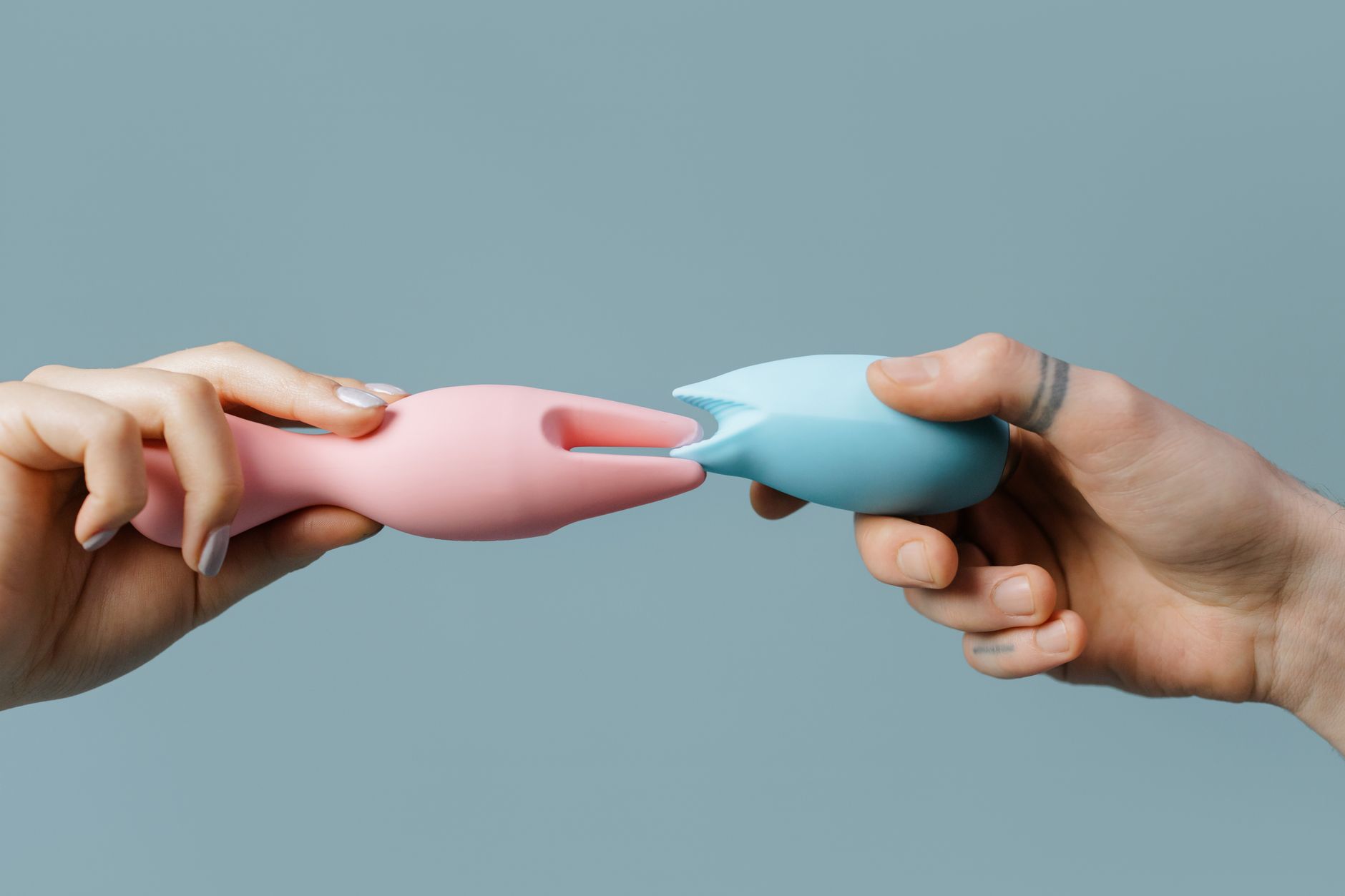
Lemon clitoral vibrators work via suction and gentle pulsing, not friction. The suction mechanism stimulates your clitoris without the same direct pressure, which means it's gentler on thinner, drier tissue. You're getting intense sensation through a different kind of stimulation—one that doesn't depend on sliding contact across your skin.
That matters practically. It means you can use a lemon vibrator with less lubricant, or sometimes with none at all (though I still recommend it). The sensation is often more intense, not less, because suction activates a different network of nerve endings than buzzing does. And the pulsing patterns on lemon toys tend to feel more nuanced and less linear than traditional vibrators.
The lubrication layer: less is actually fine
Water-based lubricant is your friend here, but "use a lot" is not the only strategy. Here's what actually works:
Start small. A quarter-teaspoon is genuinely enough for a Lemon Vibrator. The suction mechanism creates its own seal, so you're not trying to create a glide path across your vulva. You just need enough to smooth the contact point. Most people overshoot this and end up with sticky residue, which then requires more water to rinse and leaves everything feeling gunky.
Reapply between sessions, not throughout. If you're using the same lemon toy for 20 minutes, you might need to add a touch more halfway through as the original lubricant absorbs or dries. But you're not creating a constant wet surface. You're maintaining a light layer.
Silicone-based feels richer but damages silicone toys. If you have a silicone Lemon Vibrator (which you probably do), stick to water-based lubricants. Silicone lube is thicker and more luxurious, and it feels amazing, but it breaks down silicone over time. It's not worth it.
Hybrid lubes are your secret weapon if you're drier. Hybrid lubes blend water and silicone, giving you the slick feel of silicone with water-based compatibility. They feel richer than straight water-based, and they last longer on your skin without becoming sticky.
The warm-up phase is not optional
As you age, your body typically needs more time to build arousal. This isn't less pleasure. It's just a different rhythm. Instead of fighting it, structure your experience around it.
Spend 15 to 20 minutes on non-genital touch before you introduce a lemon vibrator. That means touching other parts of your body—your inner thighs, your breasts, your neck, your ears. This isn't foreplay as a stepping stone to "real" sex. It's the main event. It gets your heart rate up, increases blood flow to your genitals, and by the time you introduce a toy, your tissues are already more engorged and responsive.
Then start with your lemon vibrator on the lowest setting. Spend time exploring your clitoris with that light suction before you turn up the intensity. Your body will tell you when it's ready to increase. Listening to that signal—instead of skipping ahead to the strongest setting because you're used to needing high intensity—often unlocks sensations you haven't felt in years.
Hydration and systemic factors matter more than you think
Your vaginal lubrication is partly a reflection of your overall hydration and hormonal balance. If you're dehydrated, your body produces less lubricant across the board. If you're stressed or sleep-deprived, your cortisol levels spike and your estrogen relatively drops. If you're taking certain medications (like some antihistamines, antidepressants, or blood pressure meds), they can decrease lubrication as a side effect.
Before you assume you need a different toy or a different approach to pleasure, audit these basics:
Are you drinking enough water? That's 2-3 liters a day, not just when you're thirsty. Are you sleeping 7 to 9 hours? Stress management—are you moving your body, breathing deeply, or doing something that genuinely calms you? And if you're on medication, have you asked your doctor if it might be affecting your sexual response? Sometimes a small adjustment or a different dosing time can make a real difference.
These aren't sexy answers, but they work.
When to consider topical estrogen or other interventions
If you've adjusted your warm-up time, stayed hydrated, used lubricant thoughtfully, and sex or solo play still feels uncomfortable or painful, talk to a gynecologist or menopause specialist. Genitourinary syndrome of menopause (GSM) is real, and it's highly treatable.
Topical estrogen creams or vaginal moisturizers can make a significant difference in tissue health and lubrication. Estrogen creams have minimal systemic absorption, which means they're usually safe even if you're not a candidate for hormone therapy. You apply them a few times a week, and many people feel a noticeable shift within 2 to 4 weeks.
There's no shame in this. You're not "cheating" at pleasure. You're optimizing your body's responsiveness, the same way you'd take a vitamin if you were deficient.
The mindset piece
A lot of people internalize lubrication changes as a personal failing, or proof that their body is "done" with pleasure. It's not. It's a signal that pleasure requires slightly different technique, slightly different tools, and a slightly different rhythm. All of that is workable. All of that is normal across time.
The people who report the most satisfaction during this phase are usually the ones who got curious instead of discouraged. They experimented with different lube types. They gave themselves more time for arousal. They tried toys that worked with their body's current reality instead of against it. And they found that pleasure didn't disappear—it just became more intentional.
You deserve that experience. Your body at 45, or 55, or 65 is absolutely capable of profound pleasure. It just speaks a slightly different language than it did at 25. Learning that language is the project, and it's worth taking seriously.
FAQ: Lubrication changes and lemon vibrators
How much lubricant should I actually use with a lemon vibrator?
Start with about a quarter-teaspoon. The suction mechanism doesn't require the same glide that traditional vibrators do, so less is usually more. You're looking for a light layer that smooths contact, not a wet surface. Reapply only if you feel drying during a session.
Is water-based lube the only option for silicone toys?
For silicone toys like lemon clitoral vibrators, yes. Water-based and hybrid lubes are safe. Silicone-based lubes break down silicone over time and will degrade your toy. If you love the feel of silicone lube, try a hybrid—it splits the difference.
If my body doesn't lubricate as much, does that mean I'm less aroused?
Not necessarily. Lubrication is partly biological response, but it's also influenced by hydration, medication, stress, sleep, and estrogen levels. You can be completely aroused and still produce less natural fluid. The two aren't always linked. A lemon vibrator responds to your arousal regardless of lubrication amount.
Why do lemon vibrators work better than regular vibrators when you're drier?
Lemon vibrators use suction and pulsing instead of direct buzzing friction. That means gentler stimulation that doesn't require as much lubrication or cause the same potential discomfort on thinner tissue. Many people find suction-based toys actually feel more intense, not less.
Should I use more lubricant if I'm perimenopausal or menopausal?
Not necessarily more in volume, but possibly a richer type. A hybrid or higher-quality water-based lube may feel more comfortable than a cheap water-based option. Hydration matters too—drink more water, and your natural lubrication often improves within days.
When should I see a doctor about lubrication changes?
If lubrication is minimal and hasn't improved after you've increased hydration, adjusted stress, and given warm-up time priority, ask your gynecologist about genitourinary syndrome of menopause (GSM) or topical estrogen. Pain during sex or solo play is also worth discussing. Treatment is straightforward and often very effective.
The bottom line
Your body changes. Lubrication patterns shift. That's not a dead end. It's a redirect. Lemon clitoral vibrators work particularly well during this phase because they respond to your pleasure with gentleness and intensity, not friction. Pair that with adequate hydration, a thoughtful warm-up, and lubricant used strategically, and you often find that sensation becomes more vivid, not less.
Your pleasure matters. Your body matters. And that's true whether you're 25 or 65. If you have questions about how to optimize your experience, reach out to us. We're here to help.