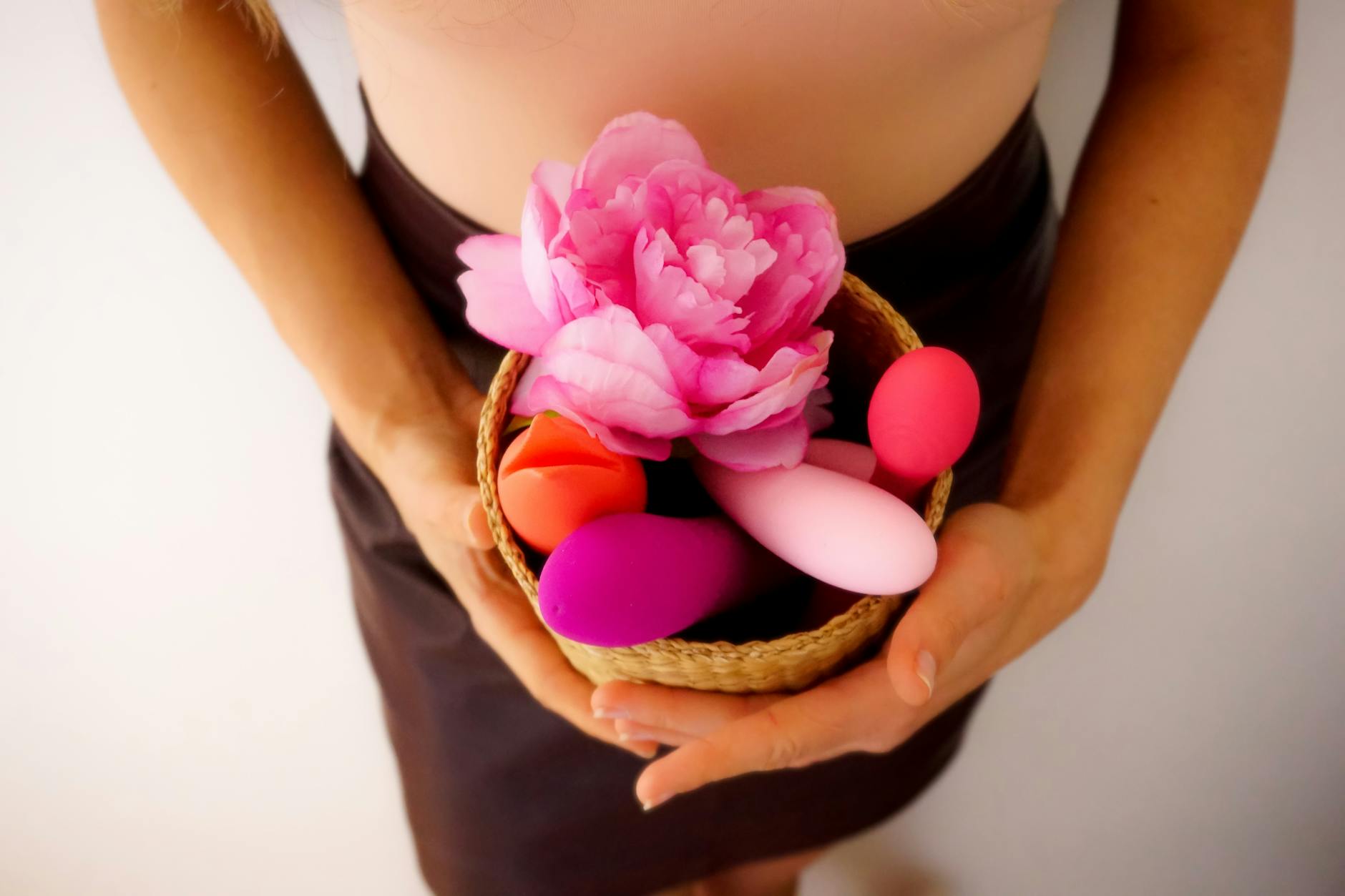
Here's the thing about pleasure routines
Most people approach self-pleasure like a New Year's resolution. You get excited, you commit, you do it three times, then life happens. Work gets busier. Your partner wants attention. You're tired. Six months pass and you feel guilty instead of good.
That guilt is the real problem. Because shame is terrible fuel for consistency.
Why consistency with sexual pleasure is actually harder than fitness
When people struggle to go to the gym, we say "life got in the way." When people struggle to touch themselves regularly, we say nothing. We just blame ourselves for being lazy or broken.
Here's what's actually happening. Fitness has external accountability (a gym membership fee, a class time, sometimes a trainer). Sexual pleasure has none. You're the only person who knows if you've skipped it, and you're also the person who feels deepest shame about skipping it. That's a brutal combination.
Second, fitness is socially framed as something you "should" do. Pleasure is still culturally framed as something you "get to" do. Should feels like obligation. Get to feels optional. Your brain knows the difference, and optional things are easy to postpone forever.
Third, consistency with exercise feels good immediately after (endorphins, soreness, visible progress). Consistency with pleasure compounds slowly. You might not notice the difference until you're three weeks in, which means you're already halfway to quitting.
The anti-motivation framework that actually works
Forget motivation. Motivation is unreliable and it requires you to feel energized on days when you're depleted.
Instead, build friction downward. Make it easier to use a lemon clitoral vibrator than to not use one.
Three ways to do this:
1. Location, not schedule. Don't decide "I'll use my Lem on Thursday nights." Thursday nights have unpredictable emotional weight. Instead, designate a place. Your bedside table. The shower. Wherever you spend quiet time alone. Put it there, charged and visible. When you're in that space, the option is already in front of you. No decision required.
2. Unbind it from purpose. Most people think "I'll use my lemon vibrator to reach orgasm." That's fine, but it also means failure if you don't come. Instead, think of it like a shower or a massage. The point is the experience itself. Five minutes of sensation. Whether or not you orgasm is secondary. This reframe removes the performance pressure that kills consistency.
3. Pair it with something you already do. Consistency experts call this "habit stacking." You already shower, you already brush your teeth, you already scroll before bed. Pick one of those moments and add two minutes with your clitoral vibrator. Not instead of. With. This way you're not adding a new item to your to-do list. You're extending something you already do automatically.
What "using it regularly" actually means
Here's where people sabotage themselves. They think "regularly" means once or twice a week, every week, forever. Life doesn't work that way. Some weeks you'll use your lemon vibrator three times. Other weeks, zero. Some months will be active. Others will be quiet. That's not failure. That's reality.
Consistency doesn't mean uniformity. It means returning to the practice after you inevitably drift away from it. You'll miss two weeks. You'll come back. You'll get busy and skip a month. You'll pick it up again. Consistency is the pattern of return, not the absence of gaps.
The only real failure is deciding that one gap means you're done forever.
How to handle the guilt when you do lapse
You're going to skip pleasure for weeks, sometimes months. It happens to almost everyone, and it's not a character flaw. What matters is what you do next.
The mistake: you come back to your lemon vibrator and immediately think "I should do this more often." That thought leads to shame, and shame makes the next time harder.
The better move: you come back to your vibrator and you just... use it. No commentary. No guilt. No promises about the future. You're not making up for lost time. You're just touching yourself right now. That's it.
If you notice yourself spiraling into "I used to be so consistent, what happened to me," interrupt that thought. You're not less motivated than you were. You're just in a different season. Seasons change. That's not failure.
Building flexibility into your routine
Rigid routines fail. Flexible routines persist.
Instead of "Tuesdays and Thursdays at 8pm," try this: "At least once a week, usually in the morning or before bed, depending on how I'm feeling." That's broader. It gives you multiple entry points instead of one specific window where you'll feel like a failure if you miss it.
Similarly, instead of "I'll use my lemon vibrator for 15 minutes," try "however long feels good today." Some days that's 3 minutes. Some days it's 20. Both count. Both matter.
Flexibility also means permission to change what consistency looks like. Maybe right now, with work chaos, "consistent" means once every two weeks. That's fine. In six months when life settles, maybe it becomes twice a week. You're not failing your old routine. You're adapting to your current reality.
What to do when you feel resistance
Sometimes you'll want to use your Lem or Pixie or other lemon adult toy and you'll feel a weird resistance. Not tiredness. Not too busy. Just... reluctance.
Don't push past it. Notice it instead.
Resistance usually means one of three things. You're actually tired and your nervous system needs rest (use your vibrator tomorrow). You've been using it the same way for too long and you're bored (try a different pattern, speed, or position). Or you're carrying shame about pleasure and your body is protecting you from it (this one needs gentleness and time).
None of those require you to force through. Forced pleasure isn't pleasure. It's performance. And performance kills consistency faster than anything.
The opposite of willpower isn't laziness. It's wisdom. If something feels wrong, it probably is.
How consistency actually changes your body and mind
This is the part people don't talk about enough. When you return to pleasure regularly, even inconsistently, something shifts.
Your nervous system starts to remember that this is possible. That your body can feel good. That sensation is available to you. That you deserve it. These aren't abstract ideas. They're physiological changes. You start to feel arousal more quickly. Your sleep improves. Your stress markers drop.
More importantly, the shame gets quieter. Not gone, but quieter. You stop beating yourself up for missing time. You start to understand that pleasure isn't something you should maintain perfectly. It's something you return to, again and again, your whole life.
That return is the consistency that matters.
When to seek support for deeper blocks
If you've tried all this and you're still unable to touch yourself without intense anxiety or shame, that's worth exploring with a therapist. Especially if you have a history of trauma around your body or sexuality.
This isn't something you should white-knuckle through alone. Some blocks need professional support. And that's completely okay. It's actually wise.
But for most people, the barrier to consistency isn't psychological trauma. It's just the friction of ordinary life, plus the shame that comes from ordinary life getting in the way. Reduce that friction. Release that shame. Use your lemon clitoral vibrator when you have the space and the want to. Skip it when you don't. Come back when you're ready. That's the whole practice.
FAQ
How often should I use lemon vibrators to see real changes?
You don't need to use a lemon vibrator weekly to see benefits. Studies on sexual pleasure show that people who return to self-pleasure even twice monthly report measurable improvements in mood, sleep, and sexual satisfaction. The research-backed minimum is probably once every two weeks, but more often you use it, the faster your nervous system and body recognize pleasure as a normal part of your life.
What if I feel motivated one week and completely unmotivated the next?
That's normal hormonal and emotional cycling. Don't rely on motivation alone. Use the friction-reduction strategy instead. Make your lemon adult toy visible and accessible. Pair it with something you already do. Your motivation will fluctuate for the rest of your life, but your routine can stay stable by not depending on motivation in the first place.
Can I use a clitoral vibrator on a schedule that works for me rather than what I "should" do?
Absolutely. Your schedule is the only one that matters. If you're someone who gets consistent with something when it happens daily, try daily. If you work better with more spacious intervals, build that in. There's no "should" here. The best routine is the one you actually follow.
Why do I feel guilty when I skip using my lemon vibrator for a few weeks?
Because you've been taught that pleasure is something you have to earn or maintain or you're failing at self-care. That's false. Pleasure is available to you anytime you want it. Skipping it doesn't make you broken. Taking a break doesn't make you lazy. You're allowed to take breaks from everything, including sexual pleasure. Guilt doesn't help. It just makes it harder to come back.
What's the difference between consistency and obsession with sexual pleasure?
Consistency means returning to a practice that feels good. Obsession means being unable to stop even when it stops feeling good, or organizing your life around it. If you're using a clitoral vibrator regularly but you're also staying connected to your partner, your work, your friendships, and the rest of your life, you're consistent. If your pleasure practice is replacing connection or causing you distress, that's worth checking in about.
How do I know if I'm not using my lemon vibrator enough or if I'm just in a quiet season?
There's no quota. If you're not thinking about it much, you're probably in a quiet season. If you're thinking about it constantly but not doing it, and you're frustrated about that gap, you might benefit from removing the friction (location strategy, habit stacking). The best indicator is honesty with yourself: Do I want this in my life right now? If yes, make it easy. If no, let it rest. Both are fine.