
Let's talk about what eye contact avoidance actually means
Your partner looks away. Every time. Whether it's toward the ceiling, at the wall, or at literally anything except your face. It stings a little, right? You interpret it as disconnection, indifference, maybe even rejection. But here's the thing: that avoidance is almost never about you. It's usually shame, performance anxiety, or what I call "sensation overload." The brain can only process so much at once, and for some people, eye contact during sex feels like being watched while they're vulnerable. That's a lot.
The good news? This pattern is reversible. And lemon vibrators—specifically their rhythm and the shift in focus they create—can actually help rewire that dynamic.
Why eye contact matters (and why it's terrifying)
Eye contact during sex triggers the vulnerable nervous system. It's exposure. Your partner isn't just experiencing physical sensation—they're being seen, which activates a different kind of arousal pathway. For people with anxiety or a history of shame around their body or sexuality, that level of visibility can feel unbearable. They're not pulling away from you. They're protecting themselves from feeling too much too fast.
Here's what's interesting: when one partner avoids eye contact, the other partner often interprets it as a rejection of them, which creates a feedback loop. The watching partner feels hurt, which creates tension, which makes the avoiding partner more anxious, which makes them avoid even harder. Within a few months, you've got couples who barely look at each other during sex.
How lemon vibrators shift the focus without forcing vulnerability
Lemon clitoral vibrators work here because they change where the attention lives. Instead of sex being about "do I look good, am I performing well, can they see all of me," it becomes about sensation and pleasure. The vibrator gives your partner's nervous system something concrete to focus on. It's almost like a grounding tool.
What I mean: when you introduce a lemon vibrator into the experience, the dynamic changes. Your partner has a job—they're not just lying there being watched. They're learning your body, figuring out where you like pressure, adjusting patterns. That activity shifts them out of the anxious observer role and into an engaged participant. And when someone is genuinely engaged with what's happening to you, eye contact often follows naturally. Not because you demanded it, but because they're actually present.
Start with the understanding that this isn't about "fixing" their avoidance. It's about creating conditions where eye contact becomes optional rather than mandatory, which paradoxically makes it more likely to happen.
The practical setup that actually works
First, have a conversation outside the bedroom. Not "why don't you ever look at me," which sounds like an accusation. Instead: "I've noticed it's harder for us to connect during sex sometimes. I'd love to experiment with some things that might help us both feel more present. Would you be open to that?" Most partners will say yes because they're tired of feeling anxious too.
When you introduce the lemon vibrator, position it as a tool for both of you, not a replacement for anything. "I'm curious what this feels like, and I want to watch your face while you touch me with it." That reframe is important. You're not asking for eye contact—you're expressing curiosity about him or her, which is different.
Start with lower vibration patterns. Pattern one or two on a lemon vibrator gives you time to adjust without overwhelming the nervous system. Your partner's job is to hold the device and explore. Your job is to breathe and stay present. Neither of you is performing.
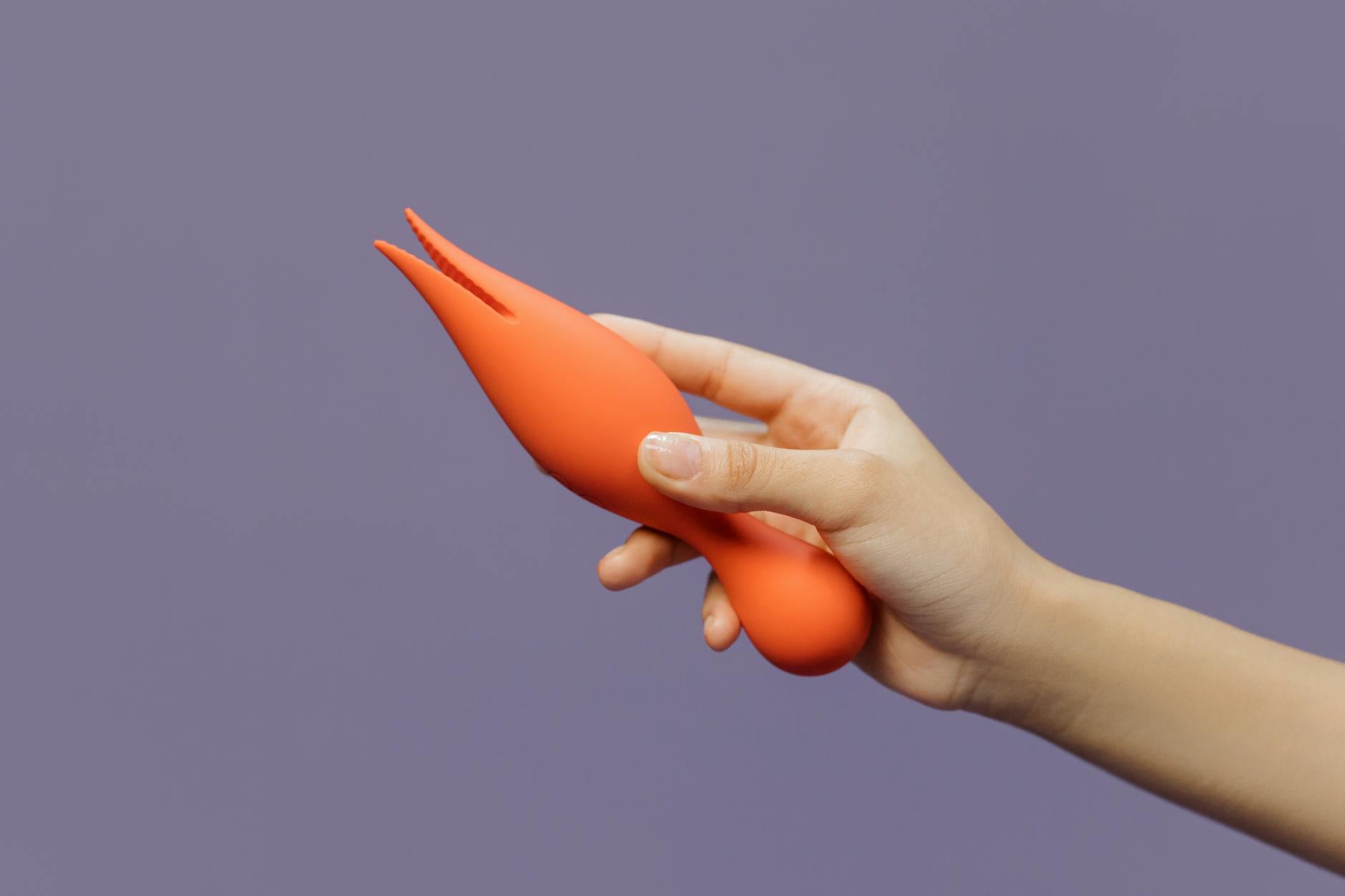
Photo by cottonbro studio on Pexels
What to do when they still look away
Don't make it a big deal. Seriously. If your partner still avoids your eyes even with the vibrator present, that's information, not failure. It means the anxiety runs deeper than simple performance pressure. That's actually useful to know.
Instead of pushing for eye contact, pivot. Guide their hand or the vibrator slowly, narrate what feels good (this keeps them engaged without requiring them to make a choice), and focus on the physical sensations you're experiencing. Sometimes removing the pressure to be seen is exactly what allows someone to eventually want to see you.
Over multiple sessions, the nervous system begins to understand that sex isn't dangerous. That being present doesn't mean being judged. And when that register shifts, eye contact often returns naturally.
Building real intimacy instead of performing it
Here's what I've watched happen in my practice: couples who introduce tools like lemon clitoral vibrators often report feeling less lonely during sex, even though it might seem like adding a device would create distance. Why? Because the vibrator removes the pressure for one person to be the sole source of pleasure for the other. It distributes the responsibility. It makes sex collaborative instead of transactional.
When your partner isn't frantically trying to be enough, they relax. When they relax, they can actually be present. And presence—sustained, genuine presence—is what eye contact actually represents. You can't fake it for long.
The lemon vibrator becomes a bridge. Not a third party, but a tool that says "we're in this together." Some couples find they eventually use it less frequently, but the intimacy patterns established while using it stick around.
How to talk about it afterward
Don't do a postmortem that feels like a performance review. Instead, offer simple, specific feedback: "That felt amazing," or "I loved how you paid attention to what I was telling you." If there was a moment of eye contact—even a glance—name it gently without making it weird. "I felt really connected to you for a second there."
Create a rhythm where using the vibrator together becomes normal, not occasional or urgent. Once a week, once every two weeks—whatever fits your lives. Consistency matters because it teaches the nervous system that this is safe space, not a high-stakes intimacy test.
When to seek additional support
If eye contact avoidance is paired with other withdrawal patterns—if your partner rarely initiates, seems disconnected outside the bedroom too, or gets defensive when you bring up feelings—there might be more going on than just sex-specific anxiety. That's worth discussing with a couples therapist who specializes in intimacy and attachment.
But for many couples, the simple act of reframing sex as collaborative pleasure rather than a performance to be watched is enough to shift the dynamic. A lemon vibrator is just the tool that makes that reframe physical.
People also ask
Can using a vibrator make my partner feel inadequate?
Only if you frame it that way. If you introduce it as "you're not enough," yeah, it'll sting. But if you position it as "let's explore together" or "I want to show you what I like," most partners actually feel relieved. They're often anxious about being a good lover too. A vibrator is permission for both of you to stop performing and start connecting.
Should I ask my partner to use the vibrator on me, or should we try it together first?
Start with them using it on you while you're together. That's less pressure than "now you try it on yourself." Once they see how you respond and feel the power of giving you pleasure, they're usually more comfortable exploring on their own terms later. Some couples never switch, and that's fine.
How long does it take for eye contact to come back?
There's no timeline. Some couples notice a shift within a month. Others take three to four months. The key is not to make eye contact the goal—make presence the goal. Eye contact is what happens when someone feels truly safe. You can't rush that.
What if my partner thinks using a vibrator means they're failing?
That's a bigger conversation about what sex means to both of you. For some people (often men), vibrators feel like a referendum on their capability. Reframe: "This isn't about what you're not doing. It's about what we can do together." Many couples find that using lemon vibrators actually brings them closer because it removes the pressure for one person to deliver all the pleasure.
Is it normal for someone to avoid eye contact during sex?
Completely. It's more common than you think. Some estimate that 40-60% of people experience some degree of discomfort with eye contact during intimacy. Sensitivity, neurodiversity, trauma, shame, or just a different nervous system wiring can all contribute. It's not a sign of a broken relationship—it's a signal that your partner needs a slightly different approach to feeling safe.
Can we rebuild eye contact without a vibrator?
Yes, but it takes longer because the pressure stays high. Without the vibrator creating a focus point, eye contact becomes the intimacy metric, which increases anxiety. A vibrator isn't required—but it's a shortcut that works for most couples.
The bigger picture
Sex is one of the few places where we're supposed to be completely visible and completely accepted at the same time. For some people, that combination triggers survival responses. Your partner's eye contact avoidance isn't a referendum on how they feel about you. It's a signal that their nervous system needs help recalibrating.
Lemon vibrators don't fix that on their own, but they do create a context where vulnerability feels less risky. They make sex collaborative instead of transactional. They give your partner something to do rather than something to be. And when someone is engaged and present, eye contact tends to follow.
The real goal isn't eye contact. It's connection. Sometimes that looks like staring into each other's eyes. Sometimes it looks like focused attention on sensation. Both count.