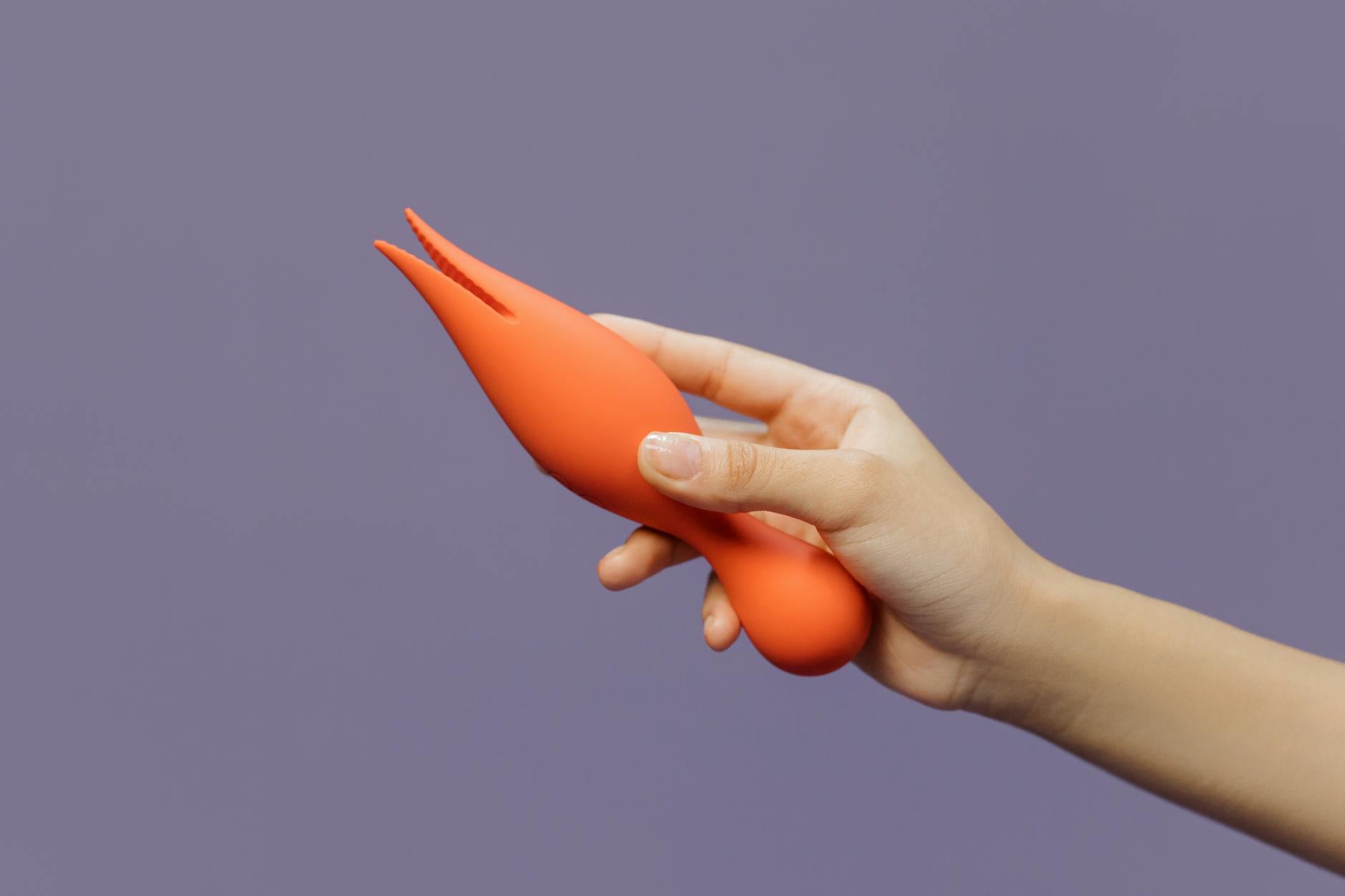
Let's be honest: your partner doesn't have a manual for your body
Your ex knew your body. Maybe they didn't know it well, but they had invested hours. Your new partner? They're starting from zero. And the pressure to perform while they learn, to fake it, to guide them without feeling like you're criticizing, is enough to make plenty of people just... check out of the whole thing.
Here's what I've seen work: stop treating pleasure like something your partner should just intuitively understand. Introduce them to a lemon vibrator instead. Not as a bypass around intimacy, but as the fastest, clearest way to teach them exactly how your body responds. It removes ego from the equation and puts information front and center.
Why vibrators make new partners better lovers
Think about it. Your partner is watching you respond. When you use a clitoral vibrator, your body tells a story they can actually read. Breathing changes. Muscle tension shifts. Where you place your hand. How long you stay at one intensity before moving to another. The patterns you repeat.
A good partner wants this information. They want to get you there. But they're also stressed about performance, worried about lasting long enough, unsure if they're hitting the right spot. A vibrator gives them permission to stop guessing and start observing.
I had a client once tell me that introducing a lemon vibrator to her new relationship was the thing that made sex actually work. Not because her partner wasn't attentive, but because for the first time, they both knew what they were aiming for instead of hoping they'd accidentally stumble onto it.
The conversation to have first
Don't just produce a vibrator in the middle of sex. That's a conversation, not a surprise. Here's what works: pick a moment that's not during sex. Maybe you're lying in bed after, or you're getting coffee, or you're literally anywhere outside the bedroom.
Frame it like this: "I want you to know what actually works for me. I've found something that helps me feel what I like, and I think it would help us figure out what you can do that feels good too."
The key: you're not saying your partner isn't enough. You're saying you want them to have better data. That's a collaborative goal, not a rejection.
If they seem hesitant, ask them directly: would they want you to know exactly what gets them off? Of course they would. Same thing. You're giving them a gift: the roadmap they've been searching for.
How to actually use it together
Start solo. Use your lemon clitoral vibrator alone first, where they can watch. Not in a performative way. Just in your normal way. Let them see where you place it, what patterns you use, how your body responds at different speeds.
This matters because it takes the mystery out of it. They see: oh, so the external part is what actually does it. Or: okay, so she needs consistent pressure, not jumping around. Or: interesting, she's most sensitive on the right side. None of this is intuitive to someone who's never had a clitoris.
Then, once they've watched you a few times and see the pattern, you hand over the controls. Literally. You show them how to hold it, where the pressure-sensitive points are, and then you lie back and talk them through it. "A little slower." "That's it." "Move it just barely to the left."
Yes, this feels vulnerable. Yes, it's awkward the first time. But it's also the fastest way to get someone trained up. After three or four times of you directing them, they'll start to predict what you need before you say it. That's when sex becomes collaborative instead of transactional.
The patterns your partner needs to notice
When they're using a lemon vibrator with you, they should be watching for a few specific things that become transferable skills:
Building intensity slowly. Most new partners go straight to high speed, thinking that's what pleasure is. What they'll notice is that you typically warm up on pattern one or two for a solid two to three minutes before progressing. Once they see that rhythm, they understand pacing in a whole new way.
The importance of consistency. A vibrator doesn't get tired or distracted. It maintains pressure and rhythm. When your partner realizes this is what your body actually responds to, they understand why some of their manual efforts felt good but didn't quite get you there. Consistency is the pattern they're missing, and now they know it.
Where sensitivity actually lives. Everyone's body is different. Some people are most responsive on the very tip of the clitoris. Others need broader pressure. Using a lemon vibrator lets your partner see exactly where your body responds, and once they know, they can replicate similar pressure with their hand or mouth.
The refractory period is real. If you tend to need a break after an orgasm, or if you need to shift stimulation slightly to build toward another one, a vibrator makes this visible. Your partner watches the rhythm change and learns that your body has a language, not just an on-off switch.
When your partner wants to use it on you during partnered sex
This is different. This is integration, not just observation. Some people worry this means they're not enough. Here's what I tell couples: a vibrator during partnered sex isn't a commentary on your partner's skill. It's just a tool, like lube or position changes.
Talk about it beforehand. "I'd really like it if you'd use the vibrator on me while we're together." Then walk through what that looks like. Do they use it before entry? After? Do you guide the angle? Do they keep going even if you're close?
Once you both know the logistics, it becomes normal. And honestly, most partners find it hot. Watching someone respond intensely to a vibrator, knowing you're connected to that experience because you're creating that feeling together, changes the dynamic. It's not you getting pleasure without them. It's you getting pleasure because of them.
The thing people don't talk about: his hands will be better
Here's what I've observed after working with hundreds of couples. After three or four sessions where your partner has watched you use a lemon vibrator, guided you with it, and learned your patterns, their manual touch gets dramatically better. They understand pressure differently. They know pacing. They can anticipate what you need.
The vibrator isn't a replacement for them. It's literally a teaching tool that makes them better at their part. That's the game. Use it that way, and suddenly sex becomes collaborative instead of performative. You're not lying there hoping they figure it out. You're both working toward something specific.
What if he's resistant
Some partners genuinely struggle with vibrators. Sometimes it's insecurity. Sometimes it's a completely different reason. If he's resistant, don't push it. But do ask why. Is he worried it means you're not satisfied with him? Then you can address that specific concern. Is he worried about noise or timing? Different problem to solve.
The conversation matters more than the vibrator. If you can get him talking about his resistance, you can usually move through it. And if you really can't, that's information too. Not everything is fixable, and sometimes incompatibility around pleasure is just what you're dealing with.
When to bring in a lemon clitoral vibrator for couples
Honestly, sooner rather than later. If you're early in a relationship and sex doesn't feel naturally synchronized yet, waiting six months doesn't help anyone. Your partner still doesn't have data. You're still faking or pushing through discomfort.
The best time is when things are good but not perfect. When you like the person, chemistry is there, but the sex feels a little hit-or-miss. That's your opening. That's when a vibrator becomes not a last resort, but a shortcut to intimacy.
The closing thing
Your pleasure is not your partner's responsibility. But your communication about your pleasure is. A vibrator gives you both language for that conversation. You're not saying "figure me out." You're saying "here's what works, and I want you to understand it." That collaboration is what actually builds lasting sexual connection. The vibrator is just the tool that makes it possible.
People also ask
Can using a vibrator make me numb to my partner's touch?
No. This is a common myth, and it's not supported by physiology. Your nerve endings don't lose sensitivity because of vibration. What actually happens is you learn what sensation you enjoy, and you become less willing to settle for mediocre touch. That's not numbness. That's clarity. Your partner's touch can absolutely feel amazing once they understand what actually works for you.
What if I orgasm faster with the vibrator than with my partner?
That's completely normal. A vibrator provides consistent, focused stimulation that your partner's body simply can't match. It doesn't mean sex with them is bad. It means they're different tools for different purposes. Some people use a vibrator first, orgasm, and then have partnered sex. Others integrate it throughout. There's no rule. Figure out what feels good.
How do I introduce a vibrator without making my partner feel bad?
The framing is everything. Don't lead with "I need this because you're not doing it." Lead with "I want you to understand what actually works for me so we can have better sex together." Make it collaborative, not corrective. And seriously, watch his face when he realizes how much easier this makes his life. Most partners are relieved.
Should we use it every time we have sex?
Nope. Mix it up. Some sessions use it, some don't. Some people like it as foreplay. Others use it during. The goal is flexibility, not dependency. If you only ever come with a vibrator, that's worth examining. But using one regularly? Totally fine and actually really common.
What if he wants to use it but I don't feel comfortable?
Your comfort always comes first. Tell him. Explain what feels off. Is it the loss of control? The noise? The intensity? Once you know, you can work with it. Maybe you use it on yourself while he watches. Maybe you try a different pattern or intensity. Maybe you just say "not tonight." All of those are valid.
Can a vibrator actually teach my partner better technique?
Yes. When your partner watches how your body responds to a lemon vibrator, they learn pressure, rhythm, pacing, and consistency. Then they can apply those lessons to their hands or mouth. It's not magic, but it's pretty close. I've had clients tell me their partner's touch improved dramatically after just a few sessions of guided vibrator use. That's exactly how education works.