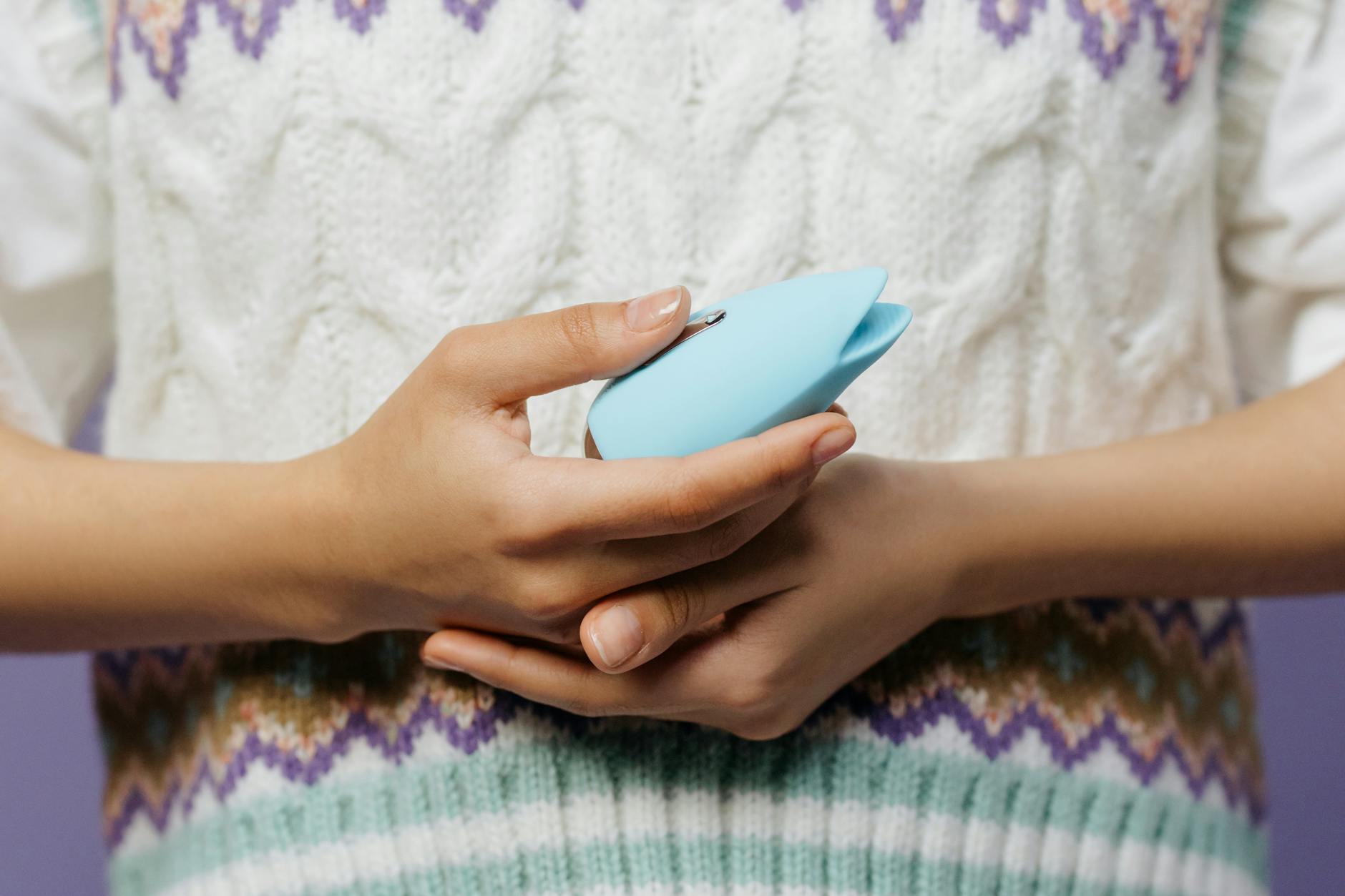
Let's talk about the tension nobody names
You want to use your Lemon Vibrator alone. Your partner wants to be part of it. Both things are valid, and both can feel true at the same time. The problem is that most couples don't have language for this particular kind of desire mismatch, so it becomes a silent negotiation where nobody wins.
One person feels excluded. The other feels pressured. Solo play that should feel good becomes either resentful or abandoned. This doesn't have to be how it goes.
Why solo play matters more than you think
Here's what I've watched happen in my practice: people who insist on always having partnered sex, never solo, often report lower overall satisfaction. It sounds counterintuitive. If you have a willing partner, shouldn't that be enough?
No. Here's why. Solo play with a clitoral vibrator like the Lem is a specific kind of learning experience. You're not calibrating your pleasure around someone else's pace, their comfort, their stamina, or their ego. You're learning what your actual arousal pattern looks like when there's zero performance pressure. You're discovering what builds your pleasure, what rhythm works, what intensity you actually want versus what you've trained yourself to want.
That information is not frivolous. It's foundational. Partners who understand their own pleasure independently tend to have better partnered sex, not worse. The irony is real.
The conversation before the friction
Most couples don't have this conversation until there's already conflict. Someone's already felt rejected, and now there's defensiveness baked in. Start earlier.
Here's how: "I really value solo time with myself. It's not about you or about our sex life. It's about understanding my own body separately. Can we talk about how that fits into our rhythm?"
Notice what's not in that sentence: apology, explanation, justification. You're naming a boundary, not asking permission. This matters tonally.
Your partner might say, "But I want to help you come" or "I feel left out." Both are real feelings. And they're separate from your actual need. Conflating them teaches you both that your boundaries flex based on someone else's discomfort. That path leads nowhere good.
What solo play actually provides (that partnered sex doesn't)
Three things, specifically:
Pressure-free learning. When you're alone with your lemon vibrator, you're not managing anyone's expectations or insecurities. You can explore intensity, duration, and rhythm without narrating the experience or checking in emotionally. That silence is powerful.
Consistency. Your body responds the same way every time because nothing's changing except you. That repetition teaches your nervous system what pleasure feels like, which means you can recognize it faster and deeper when it arrives. It's like learning a language by speaking it alone first.
Sovereignty. This is the thing nobody talks about. When you know that your pleasure is something you can access independently, you stop positioning it as a gift your partner gives you. You're not managing their role in your satisfaction. You're just satisfied. The psychology of that shift changes everything.
Setting the boundary without torching the relationship
You don't need your partner's permission to have solo time. You do need their understanding. Here's the difference.
Permission feels like "Can I?" Understanding is "Here's what I need, and here's why it matters to both of us."
Try this: "I want solo time with myself twice a week, usually evenings. This isn't negotiable, the way sleep or work time isn't negotiable. I know that might feel like a rejection, and I want to be clear about what it isn't. It's not about you or about our sex life. It's about knowing my own body. And actually, you benefit from this too. I'm learning what turns me on, which means I'm better at asking for it when we're together."
If your partner pushes back with "But can't I just be there?" or "Why not use it together?" the answer is: "Because that's a different experience, and I need both. I need you in some moments and solo time in others. Both matter."
Don't soften this or apologize. You're not being mean. You're being clear.
When solo play is actually about avoidance
There's one honest check here. Sometimes what looks like "I need solo time" is actually "I'm not interested in my partner right now" or "There's something unspoken between us." Those are real problems, but they're not the same as needing solo pleasure.
If your desire for solo play has appeared suddenly, or if you're actively avoiding partnered sex while craving solo time, that's worth examining. Not as shame, but as information. Is there resentment building? Are you not actually attracted anymore? Is something broken in how you connect?
Those conversations are harder, but they're important. A boundary that's actually avoidance just extends the problem.
What to do if your partner genuinely struggles
Some people are wired to feel excluded easily. Some have attachment wounds around rejection. Some have watched porn that taught them that women who use toys alone are unhappy or unsatisfied with their partners.
None of that changes your right to solo time. But you might need to address it more intentionally.
Consider: "I know my solo time triggers something in you. I'm not changing my boundary, but I want to help you understand it differently. Let me show you how this actually helps our sex life. Let me tell you what I'm learning about myself that I'll bring back to you."
You could invite them into the learning without compromising the boundary. "I'm exploring my own body right now. In a few weeks, I want to show you what I've discovered." That reframes solo play from exclusion to sharing.
Some partners will get it immediately. Some will take time. Some will push back forever. The last group is telling you something important about how they value your autonomy.
The practical layer: lemon vibrators and solo space
On the actual mechanics: you probably want privacy. A locked door minimum, ideally a time when you know you won't be interrupted. If you're using an air-suction vibrator like the Lem, the sound is minimal, so that's not usually the limiting factor.
Timing matters. Mornings work for some people. Late evenings after your partner's asleep work for others. Weekends when they're out of the house. The point is: you need to protect the actual time, not just theoretically claim it.
When solo play becomes partnered play (by invitation)
Here's what changes when the boundary is clear: sometimes you'll want to invite your partner in. Not because you feel obligated, but because you want to. This is the magic part.
You might say, "Come watch me. Don't touch, just watch." Or "I want your hands here while I use this." Or even "I want to use this together." The key is that you're inviting them from a place of abundance, not answering their pressure.
That difference is enormous. Partnered play that arrives after solo autonomy feels collaborative instead of obligatory. You're choosing them into it, not accommodating them into it.
The relationship truth underneath
When both partners can hold "I need solo time" and "I love what we do together" at the same time, the relationship gets stronger. You're not asking your partner to be your only source of pleasure. You're saying, "I take responsibility for my own pleasure, and I also want you in it." Those two things create a different kind of intimacy.
It's less about him or her making you come and more about you knowing exactly what makes you come, and then choosing to share that knowledge. That's actually hotter than any alternative.
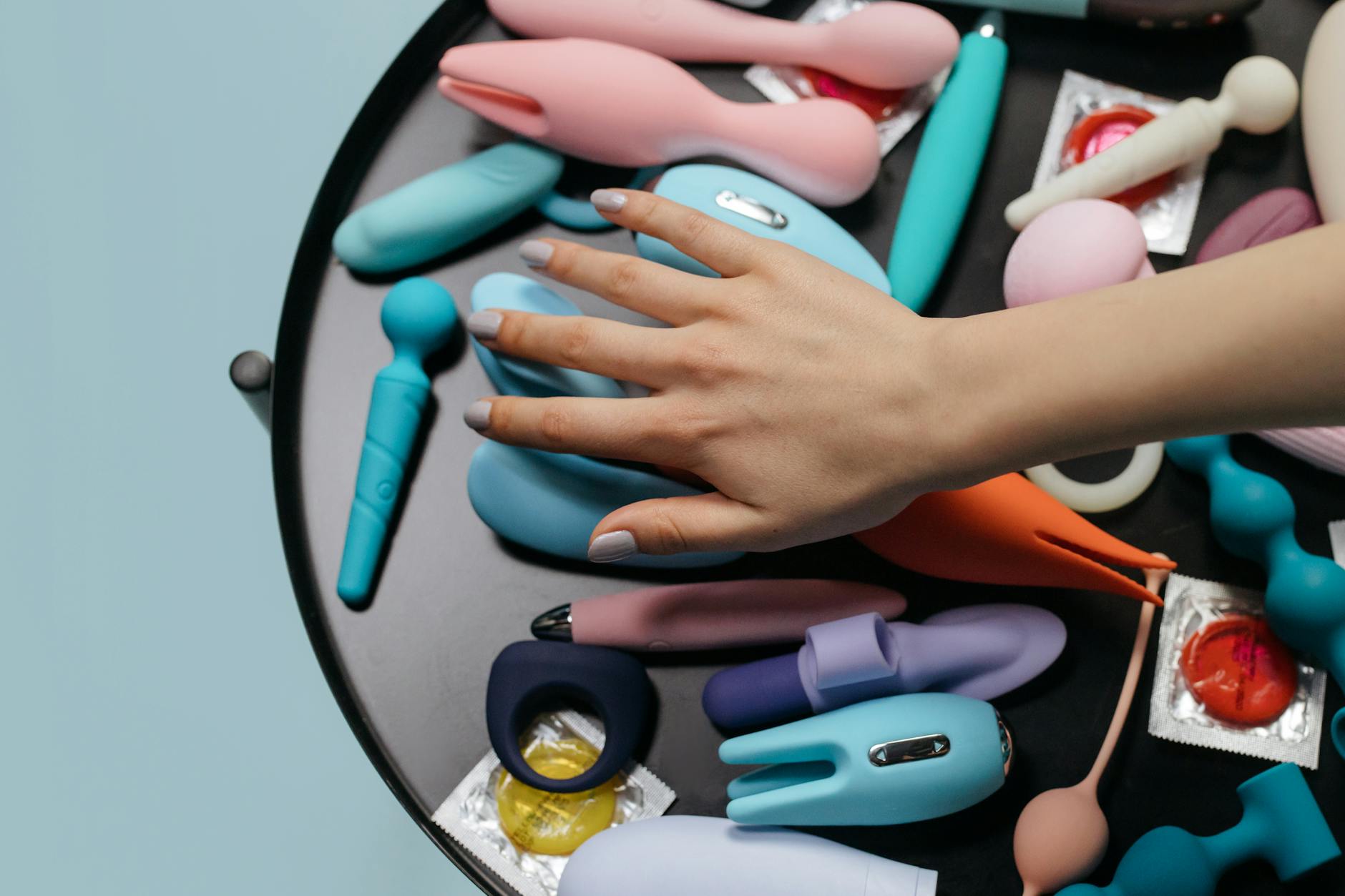
Photo by cottonbro studio on Pexels
FAQ: Solo play, partnered desire, and lemon vibrators
Is it normal to want solo time when you have a willing partner?
Completely normal. Solo play serves a different purpose than partnered sex. It's not a replacement or a symptom of dissatisfaction. It's a way to learn your body independently, which actually improves partnered sex. Most people with long-term partners report wanting both experiences.
How often should I be having solo time with my vibrator?
There's no standard. Some people want solo time weekly, others monthly, others sporadically depending on what's happening in their relationship. The key is consistency enough that it feels like a real part of your sexuality, not a secret. Twice a week is common, but three times a month or four times a week are equally valid.
What if my partner is threatened by my solo pleasure?
That's a relationship issue, not a pleasure issue. His or her insecurity doesn't change your right to your own body. You might explore where that threat is coming from (often it's about feeling valued or needed), but you don't solve it by abandoning solo time. You solve it by being clear about how solo time coexists with your partnered intimacy.
Can I use a lemon clitoral vibrator with my partner present but not participating?
Yes, absolutely. Some people enjoy having their partner in the room, perhaps reading or touching them non-genitally, without the partner actively participating in the stimulation. This can be a bridge between solo and partnered play. Communicate what you want beforehand so there's no awkwardness about boundaries in the moment.
Does using lemon vibrators solo mean I'm not attracted to my partner anymore?
Not necessarily. Some people discover that solo pleasure actually reveals what they're not getting in partnered sex, which then improves the conversation. Sometimes it means nothing about attraction at all; it's just a preference for solitude. But if the shift is sudden or accompanied by other relationship changes, it's worth examining honestly with your partner or a therapist.
How do I bring solo pleasure into my relationship without making my partner feel excluded?
Share the learning. Tell your partner what you discovered about your body, your preferences, your rhythm. Invite them in gradually. Ask them what they want to know. The more they understand that solo time is building something for both of you, not taking something away, the easier it becomes. You're not hiding pleasure; you're deepening it.
The real boundary
Your body belongs to you first. Your pleasure is not owed to anyone, including your partner. Once that's clear in your own mind, you can navigate the actual intimacy with someone else from a place of choice instead of obligation.
Solo time with your lemon vibrator isn't selfish. It's foundational. And the clearer you are about that, the stronger everything else becomes.