
The gap nobody talks about
You've come alone. Multiple times. You know your body, you know what works, and you can reliably reach orgasm when it's just you. But the moment your partner enters the picture, something shifts. Arousal stalls. Your body tenses. The rhythm breaks. And orgasm stays just out of reach.
You're not broken. This is one of the most common patterns I see in my practice, and it's not actually a body problem. It's a presence problem.
Why being watched changes everything
The neuroscience is simple: two different nervous systems. When you're alone, your parasympathetic nervous system (rest and digest) is running the show. Arousal builds steadily. Your breathing deepens. Blood flow concentrates where you need it. Your body is making decisions without an audience.
The moment your partner is watching, your sympathetic nervous system kicks in (fight or flight). You become hyperaware of how your face looks, whether you're taking too long, if your body is making weird sounds, if they're getting bored. Your amygdala, the brain's threat-detection center, lights up even though there's no actual danger. Blood redirects away from your genitals and toward your muscles (in case you need to run).
This isn't a character flaw. It's a reflex. And lemon vibrators can help rewire it because they give you something to focus on besides the audience.
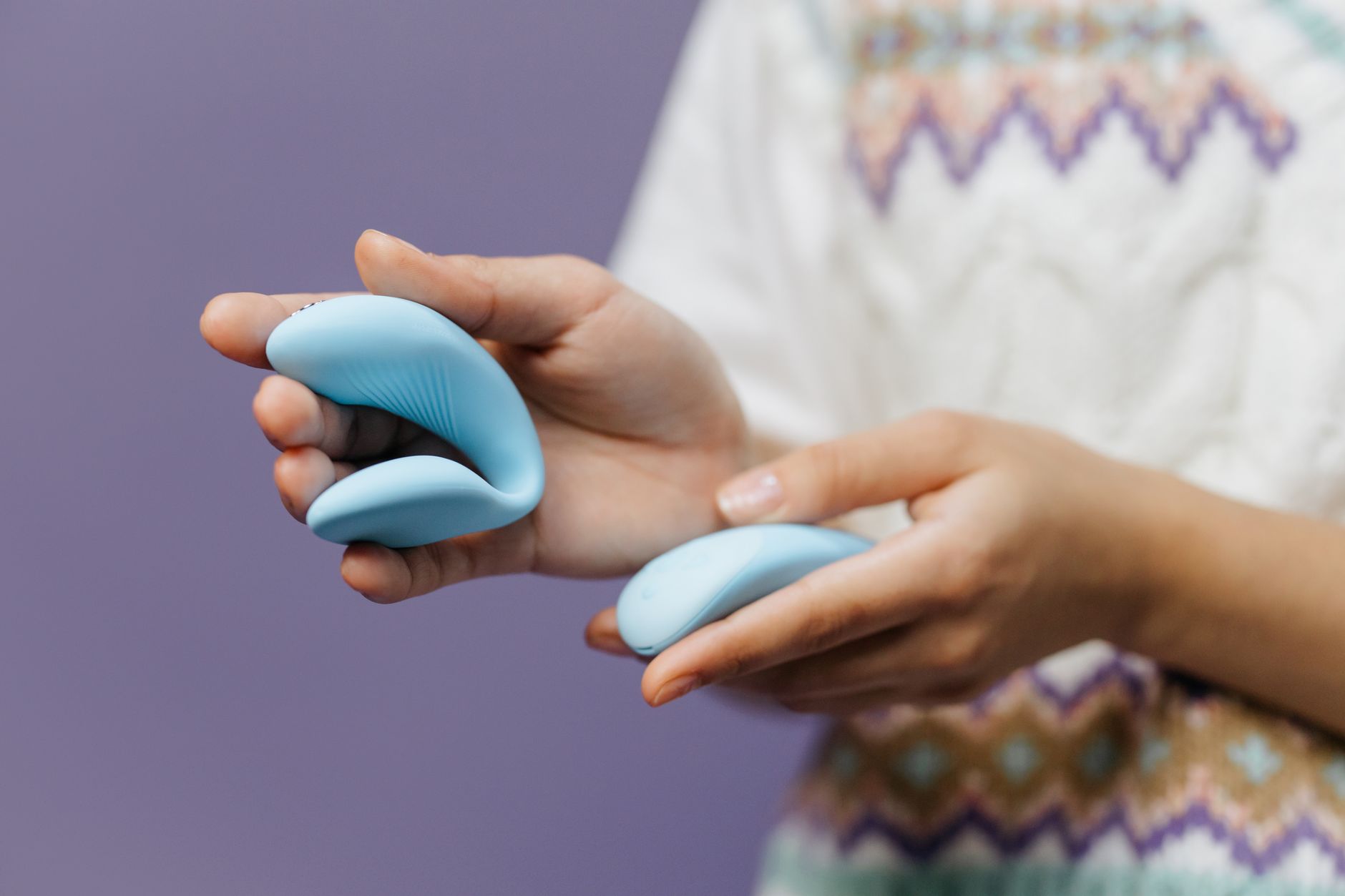
Photo by cottonbro studio on Pexels
How clitoral vibrators change the equation
Lemon vibrators work differently with a partner present because they're external, hands-free once you get going, and they deliver consistent stimulation you can't replicate with a finger or tongue. The air-suction technology mimics the sensation of oral sex but with a precision and rhythm your partner's body physically can't maintain for 20 minutes straight.
When a vibrator is doing the work, your brain has permission to relax into sensation instead of monitoring performance. You're not watching your partner's face. You're not wondering if you're taking too long. You're not managing their pleasure or your own image. You're just receiving.
That shift in mental load is where the magic happens.
The conversation before you introduce it
Here's what I've learned after years of couples work: the vibrator itself isn't the issue. The story you're both telling about it is.
If you bring it in silently, as a Band-Aid on a problem that hasn't been named, your partner will feel like you're saying "You're not enough." If you introduce it as an exciting addition you want to explore together, it becomes collaborative.
The best opener isn't clinical. It's honest. Try something like: "I've noticed I struggle to come when we're together, and I've been thinking about it. I think some of that is me tensing up, knowing you're watching. I'd love to try using a vibrator together, not as a replacement for you, but as a way to take the pressure off and actually feel more. Would you be open to that?"
That's not asking permission. It's inviting partnership.
Most partners say yes. Many say they've been thinking the same thing. Some ask clarifying questions ("Where do I come in? What do you want me to do?"). All of that is fine. The clarity just prevents resentment later.
First time with a partner present
Start slow. Don't jump to trying to orgasm together on day one. Pick a time when you're both relaxed, not drunk, and have at least 30 minutes of actual unscheduled time. Put the phone away. Tell your partner you want to focus on the sensation first, not the goal of an orgasm.
Begin with foreplay as usual. But when you're aroused and comfortable, take out your lemon vibrator and use it the way you would alone. Your partner can stay close, can touch you elsewhere, can watch, can be in the room. The only rule is they don't touch the vibrator or try to "help" with it. That's your domain.
This accomplishes two things. First, it lets your body learn that it can feel good with another person present. Second, it shows your partner what actually turns you on, which is information they've probably been guessing at.
Your nervous system will likely still have moments of resistance. That's normal. You might tense when they move closer. Your breathing might get shallow. That's not failure. That's your body recalibrating. Breathe through it. Slow down if you need to. Speed back up when you feel settled.
What to expect the first few times
Orgasm might not happen. That's not a setback. You're retraining your nervous system, and that takes repetition. Over time, your body learns that your partner's presence doesn't mean danger. Arousal gets easier to build. Your pelvic floor relaxes instead of gripping. Blood flow normalizes.
Some people find that orgasm happens faster with a vibrator than without, especially once they stop watching themselves for approval. Others find it takes longer the first few times because there's still residual tension from being watched.
Both are completely normal. The timeline is different for everyone.
When your partner wants to participate
After a few solo-vibrator sessions together, your partner might ask, "What if I use it on you?" That's a different conversation. Some people find partner-controlled stimulation too vulnerable. Others find it intensely hot because it removes the choice and the performance pressure entirely.
If you want to try it, start with them observing while you use your lemon vibrator. Once you're on the edge, they can take over if you're comfortable. The key is asking clearly: "I'd like you to try. I'll tell you if I need you to stop or adjust." And mean it. You're teaching them your body in real time.
Clitoral vibrators like Lemon's models excel here because the suction sensation is something most partners have never experienced, so it feels genuinely new to them too. That shared discovery can be bonding.
Building confidence over time
The first time you have an orgasm with your partner present using a vibrator, you might feel emotional. Relief, joy, vulnerability, all at once. That's your nervous system recalibrating. Your body just learned a new possibility.
The second time is usually easier. By the fifth time, it might feel routine. By the twentieth, your partner might not even be using the vibrator, just present, and you might find you can come without it. Or you might decide you love coming with it and never look back.
None of those outcomes is wrong. The goal isn't to eventually do this without a vibrator. The goal is to expand your capacity for pleasure, not shrink it.
The numbers here
About 65% of people with vulvas never orgasm from penetration alone. About 36% have difficulty orgasming with a partner even when they orgasm easily solo. The reason is rarely physical. It's almost always psychological. And that's exactly what a vibrator helps you solve, because it focuses your nervous system on sensation instead of surveillance.
If you've been blaming yourself for this gap, stop. You haven't failed. Your body just needed a different kind of permission. A vibrator gives you that.
FAQ: The questions that come up
Will using a vibrator make me dependent on it?
No. Dependence isn't about tools; it's about arousal pathways. You might prefer coming with a vibrator because it feels better, and that's fine. Preferring something isn't the same as needing it to function. Many people find they can orgasm with or without a vibrator once they've broken the pattern of tensing around their partner. The vibrator is a learning aid, not a permanent crutch.
What if my partner is insulted that I want to use a toy?
That's a relationship conversation, not a vibrator problem. If your partner feels threatened by a tool that helps you feel pleasure, that's a sign they might benefit from couples therapy. Your pleasure isn't about them. But a healthy partnership means their insecurity can be addressed without sacrificing your own experience. A conversation like, "I'm not rejecting you; I'm trying to relax my own body," sometimes helps. Sometimes professional mediation is necessary.
How do I know if this is my problem or if we have a real compatibility issue?
If you can come alone, the orgasm capacity exists. The gap is usually about psychological safety or nervous system activation. A vibrator tests that theory. If you can come with a vibrator and your partner present, the issue was likely performance anxiety, not a mismatch. If you still can't come even with a vibrator in a relaxed setting, the issue might be something deeper: unresolved trauma, medication side effects, or yes, sometimes incompatibility in desire or style. But you won't know until you isolate the variable. The vibrator helps you do that.
Should I hide it when we're not using it?
Not unless you feel unsafe. Hiding it suggests shame. The healthier approach is to store it somewhere accessible and neutral: a nightstand drawer, a closed shelf. The easier it is to access without ceremony, the less weird it becomes. Intimacy thrives on comfort, not secrecy.
What if I can only come with a vibrator and my partner can't accept that?
Then you have a partner who's prioritizing their ego over your pleasure, and that's the real problem. You deserve a partner who wants you to feel good, even if it means adjusting their own ideas about how that should happen. <a href="/contact">If you're navigating relationship friction around pleasure, consider reaching out.</a>
How long before I can come without the vibrator?
There's no timeline. Some people use a vibrator regularly for years and never graduate to "without it." Some people use it five times and then suddenly don't need it. Some people use it every time and never want to stop. All of those are fine. The goal isn't to eventually abandon the tool. The goal is to reclaim your capacity for pleasure, however that looks.
The real point
You can orgasm alone. That's proof your body works. <a href="/blog/how-to-introduce-lemon-vibrators-to-your-partner-without-shame-or-awkwardness">Introducing a vibrator to partnered sex</a> isn't about fixing a broken part of yourself. It's about giving your nervous system permission to relax when another person is in the room. For many people, that permission changes everything.