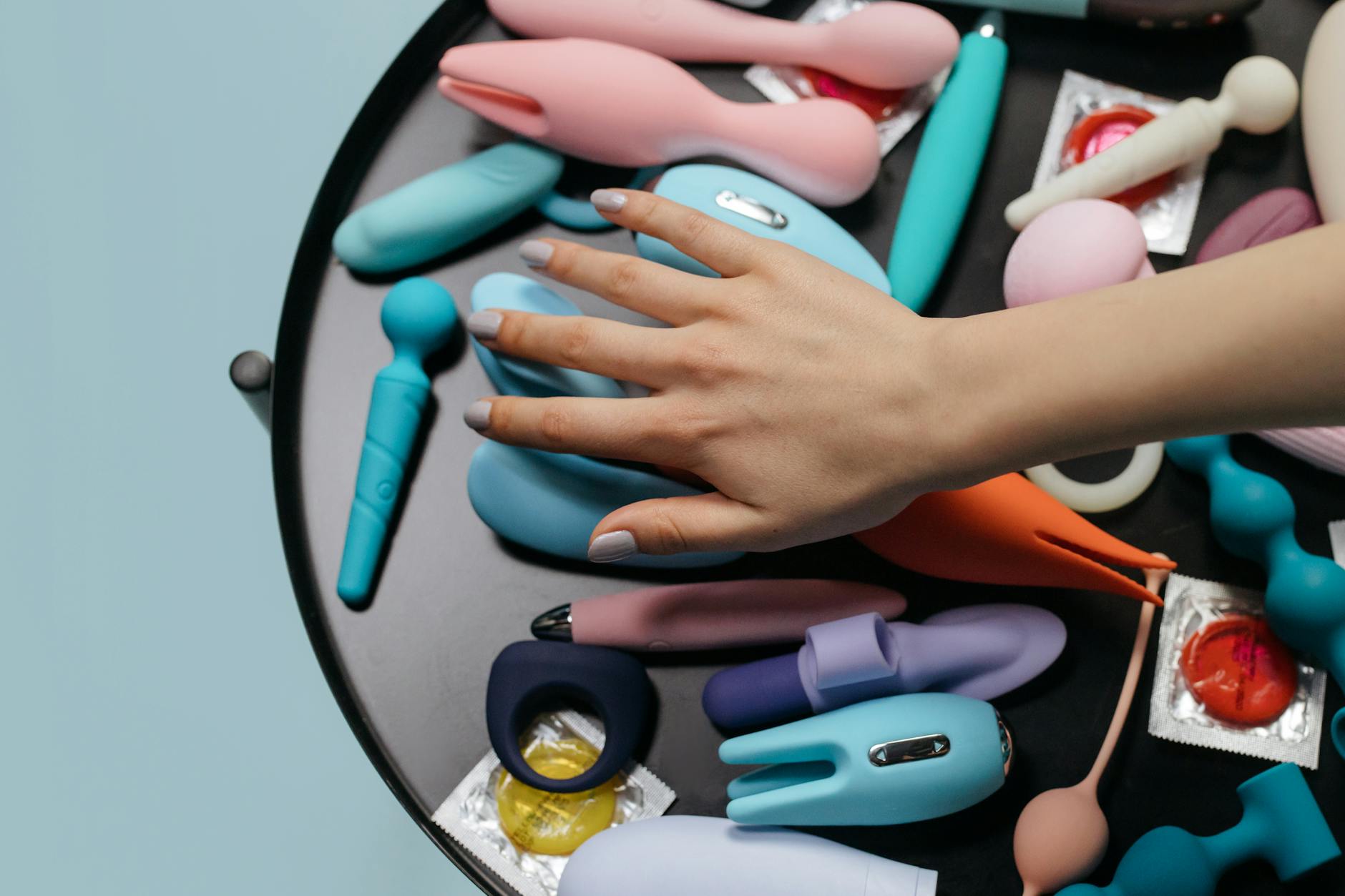
Let's talk about what nobody mentions
You've been using vibrators for years. You know your body. And then one day you notice something's off. That tingle that used to arrive within seconds now takes three minutes. The intensity that used to feel overwhelming feels like a light buzz. You're not broken. You're desensitized.
Clitoral desensitization is one of the most common issues people don't talk about because they assume it means something went wrong with them. It didn't. It means your nervous system adapted to repeated stimulation, and now you need a different approach to wake it back up again.
How desensitization actually happens
Your clitoris has around 8,000 nerve endings packed into a tiny area. When you stimulate that area repeatedly with the same intensity, the same pattern, or the same device, something called "neural adaptation" kicks in. Your brain stops registering that stimulation as novel or exciting. It's the same reason you stop noticing background noise after a while, or why a particular piece of clothing stops feeling like anything on your skin.
With vibrators, desensitization happens when:
- You use the same device at the same intensity multiple times per week
- You jump straight to high-intensity settings instead of working up gradually
- You use a vibrator with only one pattern repeatedly for months
- You rely on vibrators for all orgasms, never varying the method or rhythm
What's important to know: this is a sign your body is working correctly. Your nervous system is doing exactly what it's supposed to do. You haven't damaged anything. You just need to reset.
Why lemon vibrators are different for this
Lemon vibrators and lemon clitoral vibrators work through suction and pulsation rather than pure vibration. This matters more than you might think when you're rebuilding sensitivity.
When you've been desensitized by traditional vibrators, your first instinct is usually to go harder, faster, higher intensity. That backfires because you're just asking your nervous system to adapt even more. What you need instead is stimulation that feels different enough to surprise your body back into paying attention.
Suction-based lemon adult toys engage different nerve pathways than buzz-based vibrators. The sensation is less about rapid oscillation and more about sustained pressure and release. This different stimulus pattern helps your nervous system recognize stimulation as novel again. You're not starting from zero. You're shifting channels.
The reset protocol that actually works
Here's what I recommend for anyone dealing with desensitization and rebuilding with a lemon vibrator.
Week one: Low intensity only. If you're using a lemon sucker toy, stick to patterns 1 and 2. Don't go to 3. The goal isn't to orgasm yet. The goal is to reintroduce sensation without triggering adaptation. You're training your nervous system to pay attention again.
Week two: Extend your warm-up time. Give yourself 20 to 30 minutes before you even introduce the toy. Touch yourself, breathe, let arousal build naturally. The toy should arrive at the party as an amplifier, not the entire event.
Week three: Alternate methods. If you've been using a vibrator, this is when you introduce your lemon vibrator. The day after, use your hands or a partner's touch. The day after that, go back to the lemon clitoral vibrator. Variety is the antidote to desensitization.
Ongoing: Cycle through patterns. Even with a lemon vibrator, don't get locked into pattern 3 because it works. Use patterns 1, 2, and 4 on different days. Keep your nervous system guessing.
This isn't a punishment protocol. You're not cutting yourself off from pleasure. You're actually deepening it by making your body responsive again.
What to avoid while you're rebuilding
Don't try to speed this up. The worst thing you can do is jump back to your old intensity because you're impatient or because you start to feel a little response returning. That's the moment to pull back, not to push forward.
Don't use vibrators every single day. Even with the reset protocol, daily use keeps your nervous system in adaptation mode. Aim for 3 to 4 days per week, with at least one full day of no toys between uses.
Don't shame yourself if this takes longer than you expected. Some people regain full sensitivity in 4 to 6 weeks. Others need 8 to 12. Your nervous system isn't slow. It's just being thorough.
Don't assume you need to switch to a less effective toy permanently. Once your sensitivity comes back (and it will), you can absolutely return to whatever lemon sexual toys worked for you before. The reset is temporary. The sensitivity gains stick.
The partner conversation, if there is one
If you're in a relationship, your partner might interpret this as a personal rejection or a sign that they're not turning you on anymore. That's worth addressing directly.
Frame it clearly: "My nervous system adapted to a pattern, and now I need to retrain it. This has nothing to do with how I feel about you or your touch. In fact, your touch is part of rebuilding what I need."
Then actually involve them. Let them participate in the slow warm-up. Let them take days where they're the primary touch. This isn't a solo problem, even if the solution temporarily involves your lemon vibrator and your hands instead of both of your bodies.
What success actually looks like
You'll know desensitization is lifting when:
- Sensation returns within the first 30 seconds of stimulation
- Lower intensity feels satisfying again
- You notice differences between patterns instead of everything feeling the same
- Orgasms feel more intense than they did at the peak of desensitization
- You find yourself wanting less stimulation, not more
That last point surprises people. Once your nervous system resets, you usually need less time and intensity to reach orgasm than you did when you were chasing sensation through heavy vibration.
The long-term play
Once you're back to baseline sensitivity, the goal is to stay there. That means rotating your toys, varying your patterns, and actually using the reset protocol occasionally even when you don't feel desensitized yet.
If you love your lemon clitoral vibrator (and plenty of people do, because the sensation is genuinely different), that's fine. Just don't let it become your only tool. The most sensitive, responsive people I work with are the ones who have a small rotation of toys and aren't afraid to take breaks.
Desensitization isn't a sign you're broken or that you've used toys wrong. It's a sign your body is adaptable and responsive. The fix is straightforward, and most people find that once they've gone through one reset cycle, they're much more aware of their patterns and can prevent it from happening again.
Your sensitivity isn't gone. It's just sleeping. And the good news is that you know exactly how to wake it up.
People also ask
Can desensitization from vibrators become permanent?
No. Clitoral desensitization from vibrator use is not permanent. Your nervous system is remarkably plastic, meaning it adapts and readapts constantly. Even if you've been desensitized for months or years, sensitivity returns once you change your stimulation pattern and give your nervous system time to reset. There's no point at which the damage becomes irreversible. The reset just takes patience.
How long does it take to rebuild clitoral sensitivity?
Most people see noticeable improvement within 3 to 4 weeks of following a reset protocol. Full sensitivity usually returns between 6 to 12 weeks, depending on how long you were desensitized and how strictly you follow the rotation and intensity guidelines. Some people feel changes within 2 weeks. Others need 3 months. Your timeline is personal and valid either way.
Should I stop using vibrators completely if I'm desensitized?
No. Complete abstinence isn't necessary and often makes people more anxious about their bodies. Instead, switch your approach. Move to lower intensities, vary your patterns, take breaks between uses, and consider trying a different type of stimulation like a lemon vibrator if you've been using traditional buzz-based toys. The goal is change, not elimination.
Can a lemon clitoral vibrator help if I'm already desensitized?
Yes. Lemon vibrators work through suction and pulsation rather than pure vibration, which engages different nerve pathways. This different stimulus pattern can help your nervous system recognize stimulation as novel again, which is exactly what you need when rebuilding sensitivity. They're particularly effective during a reset because the sensation is genuinely different from what caused the desensitization in the first place.
Why does using the same vibrator pattern over and over cause desensitization faster?
Your nervous system gets bored. It's designed to notice novelty and change. When the stimulus is identical every time, your brain stops processing it as interesting or urgent. This is called habituation. Rotating between different patterns, different toys, and different stimulation methods keeps your nervous system engaged and prevents adaptation from happening in the first place.
Is desensitization a sign that I'm using vibrators "wrong"?
No. Desensitization just means you've found a stimulation pattern your nervous system has adapted to. It's not wrong. It's not a moral failing. It's not proof you're using your toy too much or too hard. It's just your body doing what it's designed to do. The fix is straightforward, and once you've reset once, you usually develop better instincts about rotation and variety that prevent it from becoming an issue again.