How menopause changes clitoral sensation (and why it's not permanent)
Let's be real: menopause shifts how your body responds to touch. Estrogen drops, tissue thins, blood flow patterns change. But here's the part nobody tells you clearly—your capacity for pleasure doesn't disappear. It reorganizes. And honestly, that reorganization often leads to more intense, more focused sensation than before.
Your clitoris doesn't shrink. Its nerve endings don't vanish. What changes is the surrounding tissue and the speed at which your nervous system wakes up to stimulation. That's not a loss. That's new territory.
Why lemon vibrators work particularly well for post-menopausal bodies
Most vibrators rely on friction and direct pressure. After menopause, direct pressure on thinning tissue can feel overwhelming, even painful. Lemon vibrators, which use gentle suction and pulsing rather than traditional vibration, sidestep that problem entirely.
Here's the mechanism. Suction stimulates the thousands of nerve endings around and under the clitoral hood without requiring intense direct contact. The tissue doesn't have to be thick and engorged for suction to work—it actually works better when there's less tissue density in the way. The sensation travels deeper, which is why many post-menopausal people report that their strongest orgasms after 50 have come through lemon clitoral vibrators.
How to Use a Lemon Vibrator If You're New to Clitoral Suction walks through the basics, but here's the quick version: the lemon vibrator creates a gentle seal and pulls stimulation inward rather than rubbing it across the surface.
The adjustment period: what to expect in the first month
If you've used traditional vibrators before menopause, the sensation of a lemon vibrator might feel strange at first. Not bad. Strange. Your nervous system is used to a certain type of input, and this is different.
Weaker sensations actually feel sharper initially because your tissue is more sensitive overall. That's not pain—it's clarity. Think of it like the difference between shouting in a crowded room and whispering in silence. The lemon vibrator whispers, and after menopause, you hear the whisper more clearly.
Start with the lowest setting. Seriously. If you're accustomed to strong vibration, the impulse is to jump to the middle or high setting immediately. Don't. Spend three to five sessions at level one or two before moving up. Your tissue will adjust, your nervous system will recalibrate, and by session six or seven, you'll have a much better sense of what intensity actually works for your post-menopausal body.
Lubrication and warmth matter more, not less
Yes, vaginal dryness is a real symptom of menopause. No, it doesn't mean you're broken. It means you need a lubricant, the same way you'd need sunscreen at the beach. Full stop.
For use with lemon vibrators, water-based lubricant is the move. Apply it generously—more than feels necessary. The suction mechanism works better with lubrication because it creates a better seal, and your tissue needs the moisture for comfort and to reduce any micro-friction.
Warmth also matters. A 10-minute warm bath or a heating pad on the lower belly before sex brings blood flow to the area and makes everything feel more responsive. This isn't a workaround for menopause. This is good information for any body, any age. But post-menopause, it's part of the setup.
The mental shift is bigger than the physical one
Menopause often comes bundled with other life changes: kids leaving home, relationship renegotiation, professional stress, grief. When pleasure shifts at the same time, the temptation is to blame hormones for everything. Sometimes the issue is hormonal. Often it's the accumulated weight of life happening all at once.
If you're struggling with desire or connection, separate that conversation from the physical changes. "I want to explore pleasure in a new way" is different from "Something's broken about my body." One is curiosity. The other is shame. Only one of them leads anywhere good.
If you have a partner, the best thing you can do is be curious together. Let them know what's changing physically. Show them what feels good now. Lemon vibrators are actually excellent for partnered use because the sensation is so specific that you can direct them easily. Best Lemon Vibrator for Couples goes deeper on that dynamic, but the basic idea is simple: your partner gets to learn your post-menopausal body fresh.
When sensitivity becomes an issue (and how to handle it)
Some people experience increased sensitivity after menopause, not less. The tissue is thinner, the nerve endings are more exposed, and suction can sometimes feel too intense. If that's you, it doesn't mean lemon vibrators aren't for you. It means you need to be more intentional about settings and approach.
Start even lower. Use more lubricant. Consider using the vibrator over the clitoral hood rather than directly on the exposed clitoris. The sensation still reaches the nerve endings, but it's mediated through tissue, which softens it slightly.
If sensitivity is extreme or painful, that's worth discussing with a menopause-trained gynaecologist. Genitourinary syndrome of menopause—thinning tissue that causes discomfort—is real and treatable. Topical estrogen creams are highly effective and have minimal systemic absorption. Don't just power through pain. Get help.
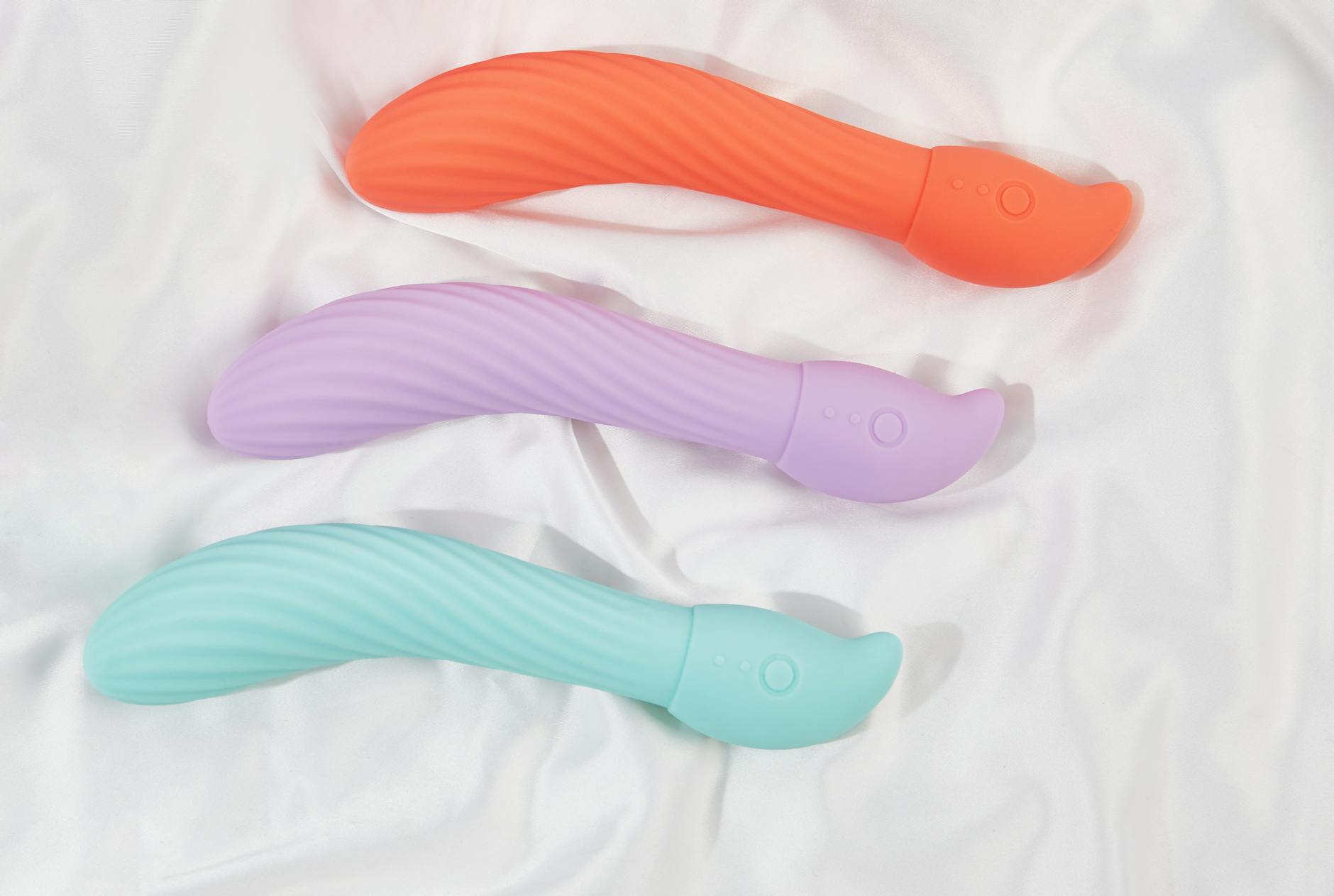
Photo by IFONNX Toys on Pexels
Pelvic floor work changes the game
Your pelvic floor muscles support your clitoris and vagina. After menopause, these muscles are less elastic and less responsive to estrogen. That means they tighten more easily and release less easily. Both of those things can muffle sensation.
Kegels are one approach, but you need the other half: learning to fully release and relax your pelvic floor. If you're always slightly clenched, even a lemon vibrator can't do its job well. Try this. During warmup, focus on breathing into your pelvic floor—imagine you're breathing down into the space between your anus and genitals. Exhale and let everything soften. That pause in tension is where the magic happens.
If pelvic floor dysfunction is significant, seeing a pelvic floor physical therapist is worth the investment. They can teach you exactly how to release the tension you're holding. That work, combined with a lemon vibrator, is genuinely transformative.
Timing and context matter more than you'd think
After menopause, arousal takes longer to build. This isn't a deficit. This is how your body works now. Budget 15 to 25 minutes of warmup before bringing the vibrator in. That's foreplay, that's touch, that's whatever gets your nervous system interested.
Context also shapes sensation. Pleasure after menopause is more sensitive to your overall stress, your relationship quality, your sense of safety in your body. If you're overwhelmed or anxious, a lemon vibrator might feel like nothing. If you're calm, connected, and unhurried, that same toy becomes extraordinary.
This isn't mystical. It's neurobiological. Your sympathetic nervous system (stress, urgency) dampens pleasure. Your parasympathetic nervous system (calm, safety) amplifies it. After menopause, that balance becomes more obvious. Use it.
Why your best orgasms might still be ahead of you
I know that sounds like a greeting card. It's not. It's a documented clinical pattern. Many people report that their most intense, most satisfying orgasms happen after menopause. Why? Three reasons.
First, less mental noise. The cycling hormones, the fertility window tracking, the performance anxiety—that background static quiets down. Quiet nervous systems feel more.
Second, permission. After menopause, the social pressure to be attractive and sexually available for a partner often lifts. People who spent decades managing their own pleasure around someone else's needs suddenly explore their own body without that filter.
Third, specificity. You know your body now. You've tried things. You know what doesn't work. That knowledge, combined with the right tool—like a lemon vibrator designed for how post-menopausal tissue responds—creates precision that younger bodies often lack.
Your pleasure matters. It doesn't end at 50. It transforms.
FAQ: Common questions about lemon vibrators after menopause
Will a lemon vibrator feel less intense after menopause?
Not necessarily. The sensation might feel different—more concentrated, less diffuse—but intensity is subjective. Most people find that lemon vibrators actually feel more intense after menopause because the tissue is more sensitive and the suction mechanism reaches deeper. Start low and adjust upward.
How often should I use a lemon vibrator if I'm post-menopausal?
As often as you want. More frequent use actually helps maintain blood flow and tissue health. There's no risk of oversensitization the way some people worry about. If anything, regular use keeps sensation sharp.
Can I use a regular vibrator if I'm post-menopausal, or do I need a lemon vibrator?
You can use whatever feels good. Regular vibrators still work for many post-menopausal bodies. The advantage of lemon vibrators—suction without direct friction—is just that they often feel better on thinning tissue and create a different, often more satisfying sensation. Why Lemon Vibrators Work Better for Sensitive Clits goes into the neurological detail.
Is lubricant really necessary with a lemon vibrator after menopause?
Yes. Not because your body is broken, but because the suction seal works better with moisture, and your tissue will be more comfortable. Water-based lube is ideal. Silicone lube can damage silicone toys, so stick with water-based.
What if I've lost all desire, not just sensation?
Desire loss after menopause is common but not inevitable. It can be hormonal (low testosterone is worth exploring with a doctor), but it's often relational or life-circumstantial. If desire disappeared suddenly, see a menopause-trained gynaecologist. If it's been fading alongside stress, relationship strain, or depression, that's worth addressing separately. Sometimes both are true.
Is it safe to use lemon vibrators if I have genitourinary syndrome of menopause?
It depends on severity. If the tissue is inflamed or painful, gentle suction is better than friction vibrators. But if there's active pain, lube and a lemon vibrator won't fix it. See a doctor first. Topical estrogen cream often resolves GSM in weeks, and then pleasure tools work even better.
The next chapter
Menopause is not the end of your sexual life. It's the beginning of a chapter where you get to define pleasure entirely on your own terms. No fertility window. No performance pressure. No time limits.
Lemon vibrators are one tool for exploring that chapter. They work beautifully with post-menopausal bodies because they understand how tissue actually feels after estrogen drops. But the real work is yours: getting curious about what sensation you want now, giving yourself permission to explore it, and understanding that your pleasure is not a relic of your youth. It's a skill you're still learning.