Let's talk about what nobody warns you about
Your therapist or GP probably told you that your new antidepressant might cause dry mouth, headaches, or nausea. Unlikely they mentioned that it might make orgasms feel like trying to hear underwater. Pleasure becomes distant. Arousal takes three times longer. Sometimes it doesn't show up at all.
You're not broken. Your medication is working exactly as designed. And there are actual tools to work with, not around, what's happening.
How SSRIs and other medications affect arousal
Selective serotonin reuptake inhibitors (SSRIs) like sertraline, paroxetine, and fluoxetine are extraordinarily effective at treating depression and anxiety. They work by increasing available serotonin in your brain, which stabilizes mood. The problem is that serotonin also regulates sexual response. Higher baseline serotonin can dampen the dopamine and norepinephrine spikes that create desire and orgasm intensity.
It's not that you stop feeling attracted to your partner or yourself. Your brain chemistry has just turned down the volume on the hardware that translates attraction into physical response. The wiring is still there. The signal is just weaker.
Other medications do this too. Antipsychotics, some blood pressure meds, certain antihistamines, and even some birth control formulations can flatten arousal. If you started a new medication and noticed pleasure shifted around the same time, that's not coincidence.
Here's what matters: this is temporary, manageable, and does not mean you have to choose between mental health and sexual satisfaction.
Why clitoral vibrators change the equation
When arousal is dampened, your body needs external stimulus intense enough to bypass the pharmaceutical softening of sensation. This is where lemon clitoral vibrators become genuinely useful, not as compensation but as amplification.
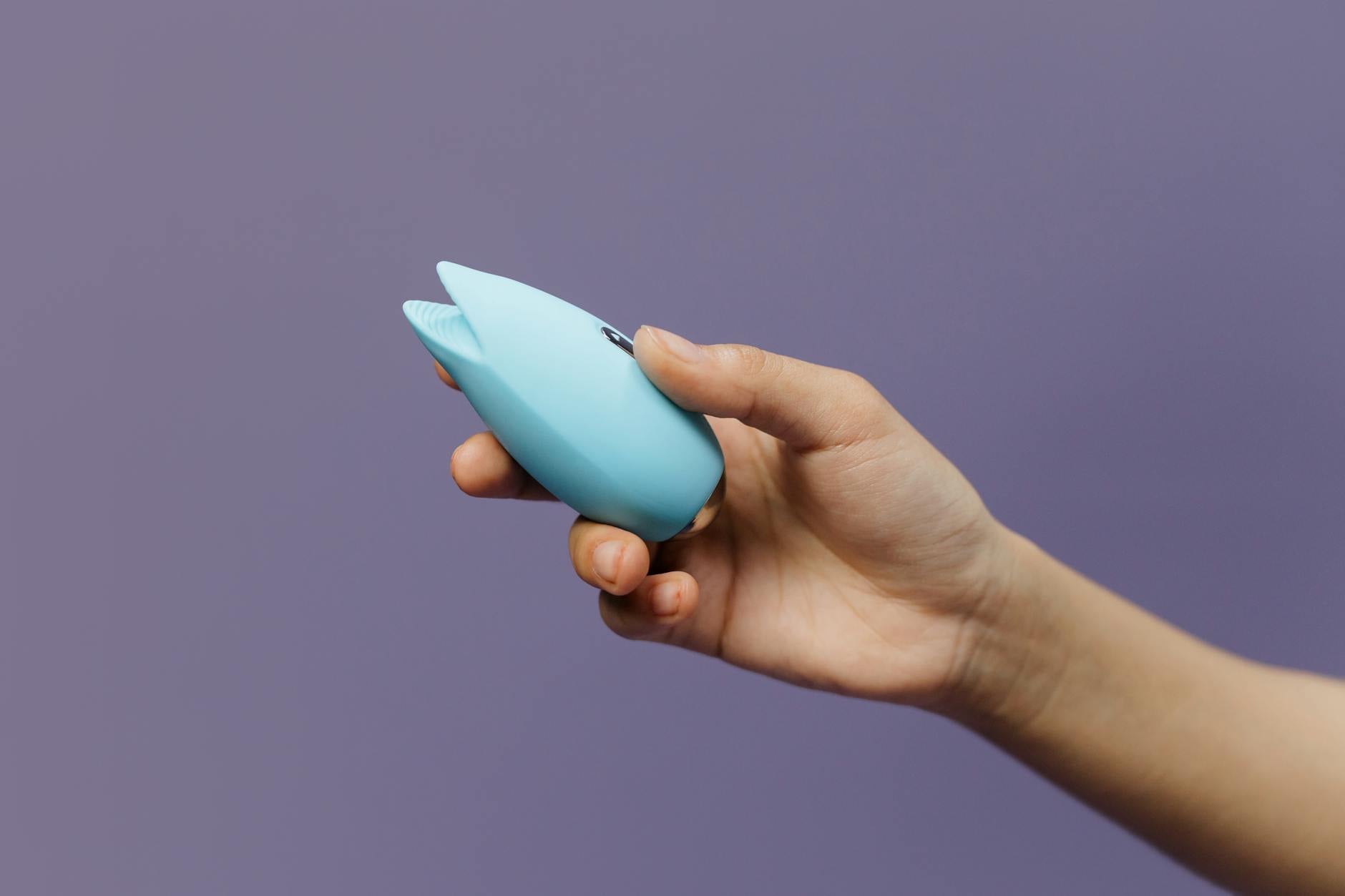
Clitoral suction technology (like the Lem by Hello Nancy) works differently than traditional vibration. Instead of friction, it creates a gentle pulsing pressure that stimulates a broader area of nerve tissue. This matters when medication has made direct stimulation feel too subtle or uncomfortable.
The sensation is more concentrating than spreading. It gathers pleasure rather than scattering it. For people whose arousal response has been dampened by SSRIs, this focused intensity often bridges the gap between "I feel nothing" and "I feel everything."n I've worked with many clients on antidepressants who found that switching from basic vibrators to lemon suction toys was the difference between orgasm feeling impossible and orgasm feeling achievable. Not easier necessarily. But possible.
What to expect in your first weeks
Unlike pleasure on a baseline brain, arousal while on SSRIs often requires intentionality. You might not feel the spontaneous spark you used to. That's the medication, not you.
Start with realistic timelines. Budget 20 to 40 minutes instead of 10. Your body may need that long to warm up. Use water-based lubricant even if you wouldn't have before. SSRIs can reduce natural lubrication, and that dryness makes direct stimulation uncomfortable.
Begin at the lowest intensity setting on your lemon vibrator. Pressure matters more than speed when your system is chemically softened. Spend several minutes just exploring sensation before expecting arousal to build. You're teaching your body a new rhythm.
Many people also find that fantasy or erotic material becomes more necessary when on SSRIs. That's not weakness or a sign something is wrong. That's your brain asking for more input to reach the same output. It's completely normal and nothing to feel strange about.
The partner conversation that actually helps
If you're in a relationship, talking about medication side effects is uncomfortable partly because it can feel like blame ("Your SSRI killed our sex life") when it's really just fact ("This medication changes my arousal timeline"). The conversations get stuck in that gap.
Try separating them. "My pleasure response is slower right now because of medication" is different from "I want us to prioritize sex more" or "I'm frustrated with our intimacy." They might all be true, but mixing them creates defensiveness.
Inviting your partner into the solution helps too. Lemon vibrators aren't about replacing partnership, they're about restoring your own sensation so partnership feels good again. That reframe can shift the entire dynamic from resentful to collaborative.
If you're single, this becomes simpler. You get to rediscover your own pleasure without explaining it to anyone. That's actually a gift.
When to talk to your prescriber about alternatives
Not every medication causes the same degree of sexual side effects. Bupropion (Wellbutrin) tends to have fewer arousal impacts than SSRIs. Mirtazapine sometimes increases libido. If your current medication is flattening pleasure significantly and other adjustments haven't helped, switching classes or adding a second medication specifically to counteract sexual side effects is a legitimate medical option.
Your doctor needs to know this is affecting your quality of life. They won't know unless you tell them. Bring specific information: when the side effect started, how it's changed your experience, what you've already tried. That conversation is harder than silence but infinitely more productive.
Some people benefit from taking medication at a different time of day (if your dose is just before bed and sex happens in the morning, timing shifts can help). Others add a second medication like bupropion or buspirone specifically to counteract the sexual dampening. These conversations are worth having.
Building back sensation gradually
One thing medication sometimes does is create a kind of learned flatness. Your body gets used to not feeling much, and even when sensation starts returning, it takes time to relearn arousal. Using lemon clitoral vibrators consistently over weeks can help restore that connection.
Try a structured approach: same time, same quiet space, same amount of uninterrupted time for the first month. Your nervous system will start to anticipate and prepare. Arousal is partly anticipation. Routine can actually build desire back in ways that seems counterintuitive.
If you find yourself reaching for increasingly intense stimulation and still not feeling much, that's worth mentioning to your prescriber too. That can signal that the medication adjustment isn't working or that adding something else might help.
Most importantly, pleasure recovery on medication is not linear. Some days will feel almost normal. Others will feel flattened again. That's not failure. That's just how neurochemistry works.
FAQ: Medication, pleasure, and what actually helps
Can I stop my antidepressant to get my pleasure back?
Not advisable. Mental health stability matters more than sexual response, and stopping SSRIs can cause serious withdrawal effects and relapse. The better path is talking to your prescriber about adjustments while staying stable. Pleasure without mental health feels like a bad trade you'd regret.
How long does it take for SSRI sexual side effects to go away?
It varies widely. Some people adapt within weeks. Others take months. A small percentage deal with it long-term and benefit most from switching medications or adding something to counteract it. Patience is real, but so is the option to talk to your doctor if months have passed with no improvement.
Does using a lemon vibrator help restore natural arousal or does it become a crutch?
Neither, really. It's a tool that meets your body where it is right now. Think of it like glasses. They don't make your eyes worse, and you don't become dependent on them in a harmful way. You use them because they help you see. Same logic. If your arousal naturally improves over time, you'll use it less. If it stays steady, you'll use it as part of your routine. Both are fine.
Is it normal to need way more stimulation on antidepressants?
Completely. Your threshold for physical sensation shifts when medications change your neurochemistry. That's not you becoming numb as a person. That's your body asking for more input to register the same sensation. Lemon suction toys often feel more effective than older vibration styles because they deliver more concentrated stimulation with less direct friction.
My partner feels rejected when I use a vibrator. How do I handle that?
This is about him understanding that vibrators aren't replacing him, they're restoring your capacity to feel good with him. Sometimes showing him how it works, or using it together, helps remove the threat he's imagining. But also: your pleasure is yours. It's not his job to provide all of it. Lemon vibrators aren't selfish. They're self-care.
What if pleasure never fully comes back even with medication adjustments?
Some people do find that their baseline arousal stays lower even after switching medications or adding supplements. Life isn't over. Pleasure looks different from what you remember, and that's grief worth feeling. But it's also not nothing. Many people find that accepting the change rather than fighting it leads to discovering new ways to feel good. A therapist or sex educator can help you navigate that shift.
You deserve to feel good again
Medicines that save your mental health aren't supposed to cost you your sexuality. They also shouldn't. The conversation between antidepressants and pleasure feels new because most people suffer silently instead of asking for help. Once you start talking about it, solutions appear.
Lemon clitoral vibrators are one of those solutions. They're not magic, but they're effective, and they work with your body instead of against what medication has changed. Your pleasure matters. Your mental health matters. Both can exist at the same time. You just sometimes need the right tool and the right conversation to make it work.
If you're navigating this right now, reach out to your GP or consider talking to a relationship coach or sex educator who understands medication effects. You're not alone in this, and you're not broken. You're just working with a different setup than before.