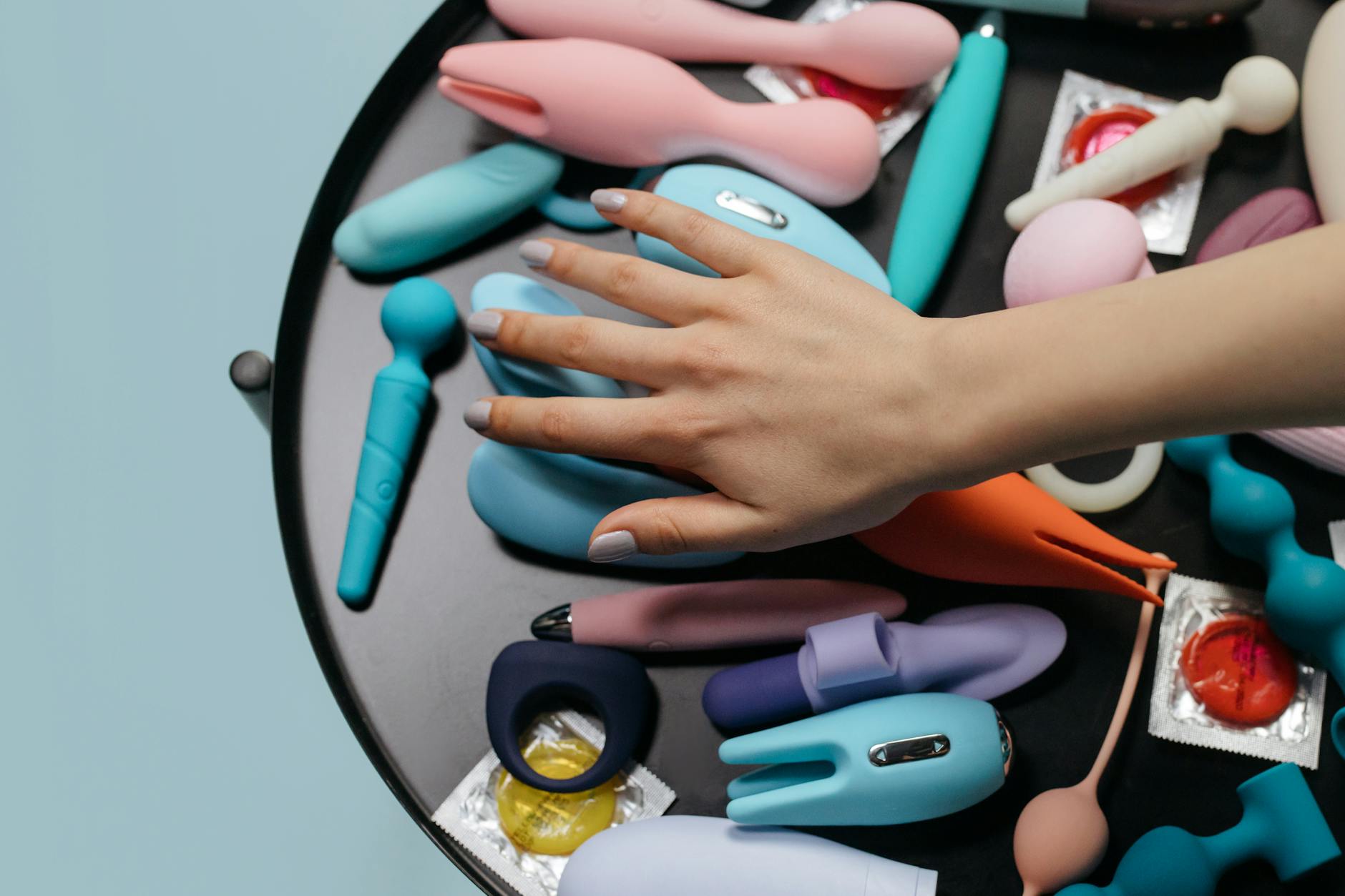
Here's the honest truth about pregnancy, postpartum, and pleasure
Your body during pregnancy is not your normal body. It's not worse. It's not broken. It's just radically different, and most of what you'll hear about sex during pregnancy falls into two useless categories: "it's fine, don't worry" or "everything shuts down." Neither is true, and both miss the actual mechanics of what's happening.
I want to walk you through the physical changes trimester by trimester, what they mean for sensation and arousal, and how tools like lemon clitoral vibrators can work with your changing body instead of against it. Because pleasure doesn't have an expiration date when you're pregnant or recovering postpartum. It just has a different address.
First trimester: when everything feels foreign
Your hormones are flooding your system. Estrogen and progesterone are climbing, blood volume is increasing, and your pelvic floor is starting to shift in preparation for birth. For many people, this means heightened sensitivity in the breasts (often in a way that feels sore, not erotic) and increased blood flow to the vulva.
But here's what surprises most people: arousal can actually feel faster in the first trimester. More blood to the genitals means quicker engorgement, quicker lubrication. The texture is different though. Some people report that penetration feels slightly more intense because of increased tissue engorgement, and the internal sensation changes.
The catch is mental. Nausea, exhaustion, and the cognitive weight of early pregnancy often tank desire completely, regardless of what's happening physically. This is not your libido dying. This is your nervous system saying "we're in a major biological event and we need energy for that." It passes.
If you want to explore pleasure during the first trimester, go slow. Warm up longer than usual. Lemon clitoral vibrators work well here because you don't need deep penetration or complex sensation. Suction-based stimulation like the Lem can feel gentler on increasingly sensitive tissue while still delivering intense sensation.
Second trimester: the window where it often feels good
Your body has adapted to the hormonal shifts. Nausea usually eases. Energy returns. And because you're further along, the reality of pregnancy feels less abstract, which helps mentally.
Physically, here's what's happening: your clitoris may be slightly enlarged from increased blood flow. Your vaginal lubrication is richer. The pelvic floor is under different tension, which can actually make some sensations more pronounced. Many people report deeper, more satisfying orgasms during the second trimester because of increased pelvic blood flow and the weight of the uterus creating different pressure.
This is often the "sweet spot" trimester for pleasure, if you want it. Your belly isn't yet at the size where positioning feels impossible. Your energy is higher. Your body feels more stable.
The risk is overconfidence. Your pelvic floor is working harder than usual to support your growing uterus. Don't skip the warm-up. Don't jump straight to intense sensation. Start at lower intensity settings on lemon sexual toys and build up. Your nervous system is managing a lot already.
Third trimester: adaptation, not absence
Your belly is large. Your breath is shorter. Your pelvis aches. Your center of gravity has shifted. Pleasure doesn't disappear, but the logistics change dramatically.
What changes physically: your clitoris is pushed forward slightly by the enlarged uterus, which can actually make external stimulation feel more intense (some people love this, some find it too much). Your pelvic floor is under maximum tension and fatigue. Your ligaments are loosening in preparation for birth. Penetration may feel uncomfortable simply because your body is making room, and adding anything into the vagina feels crowded.
This is where external clitoral stimulation shines. Lemon clitoral vibrators designed for external-only use become invaluable. You can stay on your back, side, or even sitting up depending on what feels stable. You don't need penetration. You get sensation and orgasm with minimal physical strain.
One more thing: third trimester orgasms can trigger Braxton-Hicks contractions. These are not labor. They're your uterus practicing. They feel like tightening. Most medical providers say this is fine, but check with yours. If you're high-risk, hold off on intentional orgasms. If you're low-risk and your provider clears it, orgasms late in pregnancy can actually feel incredible because of all the pelvic blood flow and the sheer amount of nerve activity happening.
The fourth trimester: postpartum recovery and sensation
Here's where most conversations about pregnancy and pleasure just stop. They shouldn't, because postpartum changes are as dramatic as pregnancy itself, and they last longer.
If you had a vaginal delivery, you've got healing to do. Tissue is swollen, tender, possibly stitched. If you had a cesarean, you've got an abdominal wound healing. Both change sensation completely.
For the first 6 weeks, most providers recommend no penetration and no internal stimulation. External clitoral pleasure with lemon vibrators can be fine, depending on how you feel. Start incredibly gently. Your entire pelvic floor is inflamed and exhausted. Low-intensity settings, shorter sessions, longer warmup.
Around week 6 to 8, if healing is progressing well, you can start experimenting again. But here's what actually happens: your hormones have shifted. If you're breastfeeding, your estrogen is lower, which means less lubrication and less tissue thickness. Even if you're not, your progesterone was stratospheric for nine months and it's now crashing. This affects arousal speed, orgasm intensity, and sensation quality.
Most people report that pleasure feels muted for 3 to 6 months postpartum. This is completely normal. Your body is prioritizing milk production, healing, and baby care. Your nervous system is in survival mode. Pleasure comes back, but it takes patience.
When you do return to lemon sexual toys or any stimulation, start lower than you think you need to. Your pelvic floor is likely still overly tense (even though it feels tired, tension and fatigue coexist). Longer warmup. More lubrication. Patience.
The pelvic floor through all of it
Your pelvic floor is literally supporting the weight of your pregnancy, then recovering from either the stretching of delivery or the trauma of surgery. By postpartum week 2, most people assume they're fine. They're not. Full healing takes 12 months, minimum.
During pregnancy, your pelvic floor muscles are lengthened and weakened. After vaginal birth, they're additionally stretched. After cesarean, they're still impacted even though there's no direct tearing. This matters for pleasure because the pelvic floor is part of the orgasm response. If it's weak, orgasms may feel shallower or harder to reach. If it's tense, they may feel blocked or painful.
Pelvic floor physical therapy is not just for incontinence. If you can access it postpartum, it transforms pleasure recovery. A pelvic floor PT can help you understand what's tight, what's weak, and how to retrain the muscles so sensation comes back fully.
Until then: breathe into your pelvic floor during pleasure. Let it relax. Don't bear down. This single habit speeds recovery and restores sensation faster than anything else.
Hormones and desire: the piece no one mentions
Pregnancy floods your system with progesterone and estrogen. Postpartum, these drop like a stone. If you're breastfeeding, prolactin (the milk hormone) rises and suppresses estrogen further. If you're not breastfeeding, your hormones stabilize around 6 to 12 weeks, but the crash in the first weeks is dramatic.
Lower estrogen means less genital blood flow, less lubrication, lower desire. This is biology. It's not a sign that something is wrong with you or your relationship. It's a sign that your body is doing exactly what it's supposed to do.
Desire usually returns fully around 6 to 12 months postpartum, but if you're exclusively breastfeeding, it can take longer. Weaning often triggers a noticeable increase in desire within weeks. If you're on hormonal birth control postpartum, that also affects desire. Talk to your provider about options if you notice it's still flat after 12 months.
In the meantime: desire-free pleasure is still pleasure. You don't need to want it to enjoy it. Orgasms release oxytocin, which helps bonding, reduces postpartum anxiety, and feels good. You can have them without waiting for desire to show up first.
Partner communication through the transitions
Your partner needs to understand that this is happening to your body, not to your relationship. Pregnancy changes don't mean you're less attracted. Postpartum flatness doesn't mean the intimacy is gone. It means your nervous system is managing a massive transition.
The conversations that help: "My body is responding differently right now, and I want us to explore what feels good now, not what felt good before." Separate your body's changes from emotional intimacy. Don't conflate "I can't have sex right now" with "I don't want to be close to you."
If your partner is struggling with the changes, that's worth addressing directly. Some partners feel rejected when your body needs something different. Some feel anxious about what's safe. Some are exhausted from supporting you and aren't thinking about pleasure at all. Name it. Don't assume they understand. Most people have zero education about postpartum bodies.
When to see someone
If pain persists beyond 8 weeks postpartum, see a pelvic floor PT or your OB/GYN. If desire hasn't returned by 12 months and it's affecting your wellbeing, talk to your doctor about hormonal assessment. If you're having intrusive thoughts about your body or your sexuality postpartum, that's a sign of postpartum depression or anxiety. Tell someone. Get help.
Pregnancy and postpartum are not a pause on your sexual self. They're a transformation. Your body is learning new patterns, new sensations, new capacities. Lemon clitoral vibrators, patience, and communication with your partner and your body can carry you through all of it.
People also ask
Is it safe to use lemon vibrators during pregnancy?
If your pregnancy is low-risk and you have no bleeding, placental issues, or preterm labor risk, external clitoral stimulation is generally safe throughout pregnancy. Check with your OB/GYN, especially in the third trimester, because orgasms trigger contractions. If your provider clears it, lemon vibrators are particularly good for pregnancy because they don't require penetration and they're gentler on increasingly sensitive tissue. Start with low intensity and stop if you feel pain or heavy cramping.
When can you use a vibrator after giving birth?
Most providers recommend waiting 6 weeks before any internal or penetrative stimulation if you had a vaginal delivery, and at least 6 weeks if you had a cesarean. External clitoral stimulation with a lemon vibrator can often start sooner, usually around week 3 to 4, if you feel up to it and aren't actively bleeding. But gentle is the operative word. Your pelvic floor is recovering. Start with the lowest intensity settings and short sessions. If you experience pain, bleeding, or swelling, stop and check with your provider.
Why does everything feel numb postpartum?
Several things cause postpartum numbness: your pelvic floor is swollen and fatigued, your hormones have crashed (especially estrogen, which controls genital blood flow), your nervous system is in survival mode, and you're exhausted. This is temporary. Most sensation returns within 3 to 6 months as your hormones stabilize and your pelvic floor recovers. Pelvic floor physical therapy speeds this up significantly.
Can pregnancy change your orgasm permanently?
Yes, sometimes. For some people, pregnancy and vaginal delivery permanently change the angle of the vagina, the tone of the pelvic floor, or the nerve connections in the pelvis. Some people report stronger orgasms postpartum. Others report they're quieter or harder to reach. This is usually not permanent, but it can take 12 to 18 months to fully stabilize. If the change persists and bothers you, pelvic floor PT can help retrain the muscles and restore sensation.
Do lemon clitoral vibrators work better than vibration during pregnancy?
Lemon vibrators use suction rather than vibration, which means they create gentle pulling sensations rather than rapid buzzing. During pregnancy, when tissue is engorged and sensitive, many people find suction feels less intense and more comfortable than vibration. It's not universal, but it's worth trying. Start with the lowest setting and see what your body tells you.
How long does postpartum recovery actually take for pleasure to feel normal?
Full postpartum recovery varies wildly. Most providers say 6 weeks, which is when you can physically resume activity. But true sensation and desire recovery takes 3 to 6 months for some people, and up to 12 months for others, especially if you're breastfeeding. By 18 months, most people report feeling like themselves again. Be patient. Your body did an enormous thing.
The long view
Pregnancy and postpartum reshape your relationship with your own body. The pleasure you had before will likely return, but it may arrive looking different. Some people discover they prefer lemon sexual toys postpartum because they don't need penetration and they respect their body's current limits. Some people find that after months of touch being about feeding or comfort, sexual pleasure feels alien at first.
This is all normal. Your body is not broken. You're not less sexual. You're just in a different chapter. Let yourself discover what works now, trust that sensation returns, and talk to your partner openly about what's happening. Pleasure doesn't vanish when you become pregnant or give birth. It shifts. And often, when you come out the other side, it's richer than before because you've learned to listen to your body instead of just expecting it to perform.
If you're navigating these changes and need support beyond what you and your partner can figure out alone, reach out. Connection through transition is what we're here for.
Sources and further reading
American College of Obstetricians and Gynecologists (ACOG) on Sexual Activity During Pregnancy
Pelvic Health and Rehabilitation Center: Postpartum Recovery Guide
Master, V., & Johnson, W. H. (1966). Human sexual response. Little, Brown and Company.
Leeman, L., & Greenberg, J. A. (2013). Vaginal Birth After Cesarean: Decision Making in the Patient With a Previous Cesarean Delivery. Clinical Obstetrics and Gynecology, 56(2), 228-234.
Barnes, T., Einarsson, J., & Tully, B. (2015). Postpartum Pelvic Floor Disorders. Contemporary OB/GYN, 60(5), 12-17.