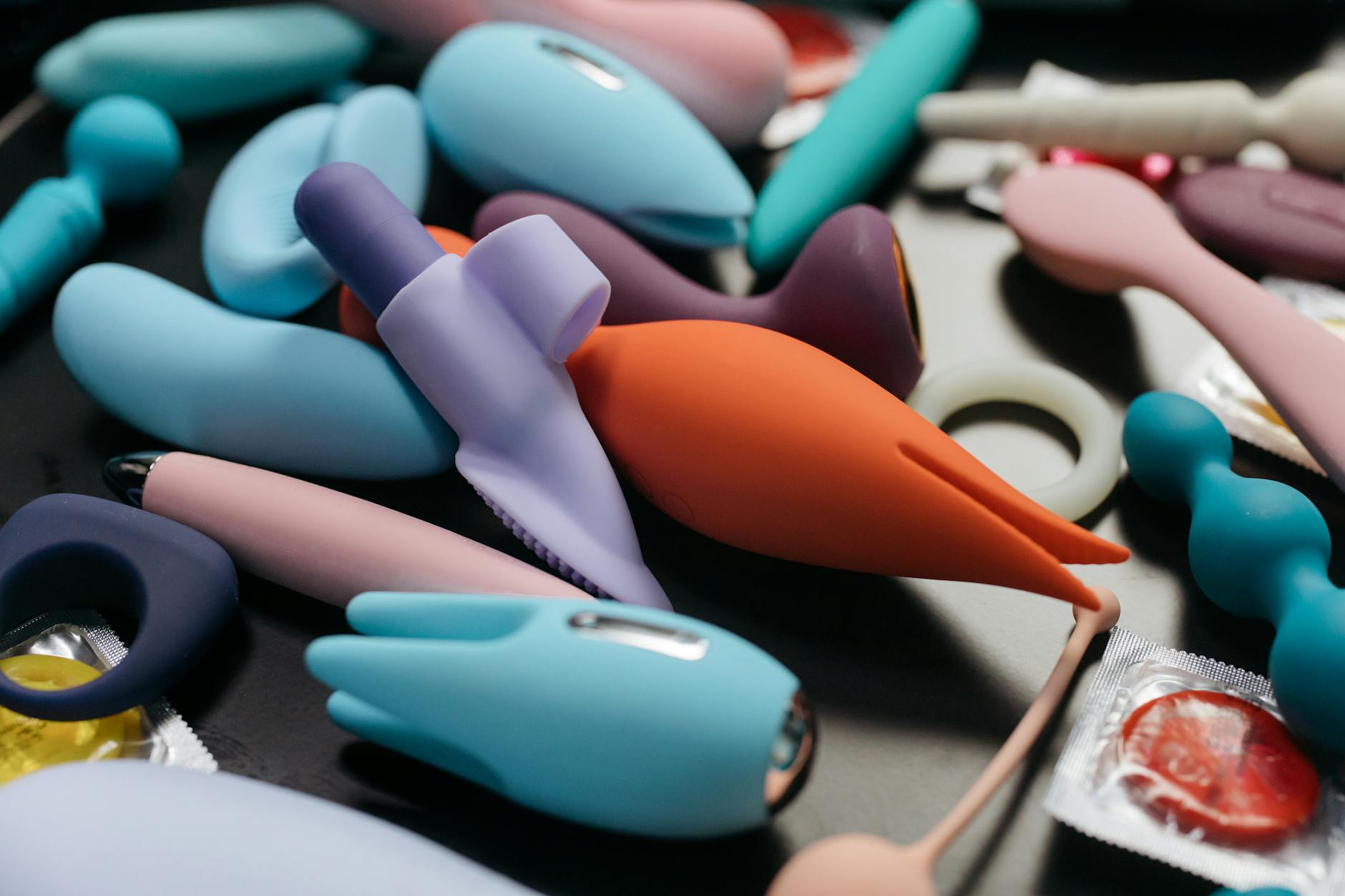
Your pleasure doesn't stay the same for 30 days
Honestly, if you've ever noticed that a vibrator intensity that felt perfect last week suddenly feels meh (or overwhelming), your cycle isn't playing games with you. It's real neuroscience. Estrogen, progesterone, and testosterone fluctuate in patterns that directly change how your clitoris responds to stimulation, how fast you get aroused, and what kind of orgasm you're capable of having on any given day.
Most people treat their lemon vibrator the same way every time they use it. That's like wearing the same pair of shoes whether you're hiking or going to a wedding. You can do it, sure, but it's not optimized. Once you understand how your hormones affect sensitivity across your cycle, you can actually dial in your pleasure instead of just hoping it works.
Here's what's happening in your body and exactly how to work with it.
The follicular phase: sensitivity cranks up
This starts the day your period ends and runs through ovulation (roughly days 5 to 13 of a typical 28-day cycle). Estrogen is rising steadily. Your clitoral tissue becomes more engorged, blood flow increases, and nerve sensitivity actually heightens.
What this means: you'll probably notice that lower vibration settings feel more intense than they did during your period. A pattern you blasted through at level 5 three days ago might feel intense at level 3 now. This is also when most people report the easiest time reaching orgasm. Arousal builds faster. Your baseline sensitivity is genuinely higher.
How to use your lemon vibrator here: Start lower than you think you need to. If you're used to working your way up through patterns 1, 2, 3, try beginning at pattern 1 or even hovering just above it in this phase. You have a narrower window before overstimulation kicks in, but you'll also reach that satisfying climax faster than other times of the month.
Ovulation: the intensity peak
Right around day 14, estrogen peaks and drops, triggering the release of an egg. For a 24 to 48 hour window, you're at maximum sensitivity and usually maximum desire too. Testosterone also spikes during ovulation, which drives that "I really want this" feeling.
What this means: this is often the easiest time to have an orgasm. Some people report multiple orgasms or more intense ones. Your clitoris is maximally engorged, blood flow is highest, and your brain is literally more receptive to pleasure signals.
How to use your lemon vibrator here: You can lean into intensity. If you've been cautious during the follicular phase, ovulation is when you can experiment with higher patterns without as much risk of oversensitivity. Many people find this is the time when they can handle longer sessions and more direct stimulation. Pay attention to what feels different about your response, because it will shift again in about 48 hours.
The luteal phase: patience becomes your strategy
After ovulation, progesterone rises and estrogen drops. This runs roughly days 15 to 28. Progesterone has a dampening effect on arousal and sensitivity. It's not a bad thing, it's just different. You're neurologically less responsive to pleasure stimuli. Arousal takes longer to build. Some people find their clitoris feels less sensitive, almost numb compared to the follicular phase.
What this means: you might need more stimulation time. A 10-minute session that worked perfectly two weeks ago might need to become 20 minutes now. You're not broken, your hormones are just asking for a longer runway.
Progesterone also pairs with higher cortisol in the luteal phase, which means you're more likely to feel stressed or distracted during sex. This interferes with arousal too, layering on top of the hormonal reality.
How to use your lemon vibrator here: Lean into longer sessions and warmer-up time. You might start with a setting lower than your usual baseline and plan to spend 15 to 25 minutes before expecting an orgasm. Some people find that combining the vibrator with touch, partnered play, or fantasies helps bridge the arousal gap. This is not weakness, it's cycle awareness.
One more thing: if you find the luteal phase wildly uncomfortable (severe cramping, bloating, emotional dysregulation), that's worth mentioning to a doctor. Premenstrual dysphoric disorder (PMDD) and endometriosis both change sexual response, and neither one means you should just accept misery.
Menstruation: the reset window
Days 1 to 4 (roughly), your period is active. Hormone levels drop to their lowest point. Pelvic floor tension is usually lower, which means some people find it easier to relax and receive pleasure. Blood flow to the pelvis is already high, which can actually make arousal easier even as sensitivity bounces around.
What this means: some people love having sex and using vibrators during their period. Others find cramps make it uncomfortable. Both are totally normal. If cramps ease with orgasm (which happens for about 50% of people), your lemon vibrator can actually feel therapeutic.
How to use your lemon vibrator here: If you're menstruating and interested in pleasure, shorter sessions often feel better than long marathons. Your pelvic floor might be more relaxed, so you might notice you can reach orgasm faster. If you have cramps, stick to whatever intensity feels soothing rather than pushing for the big finish. Some people find gentler, rhythmic patterns feel better than intense ones during their period.
How to actually track this
You don't need a fancy period app, though those help. The minimum: note three things.
First, how many minutes of stimulation it took to orgasm (or how it felt if you didn't). Second, which vibration pattern and intensity you used. Third, roughly where you are in your cycle (menstruating, post-period, around ovulation, or pre-period).
After two or three cycles of tracking, patterns will emerge. You'll notice that ovulation week you needed pattern 2. You'll notice that during the luteal phase, pattern 3 did the job. You'll see that your arousal time shifted from 8 minutes to 15 minutes during certain weeks.
This isn't obsessive. It's literacy. Once you know your own patterns, you can plan accordingly and actually use the lemon vibrator settings that work instead of guessing every time.
Stress and cycle awareness compound each other
Here's the thing that makes cycle syncing real: when you're stressed, your nervous system is in fight-or-flight. That suppresses arousal regardless of where you are in your cycle. But during the luteal phase, when progesterone is already dampening your response, adding stress on top amplifies the effect.
This is why someone might feel totally able to reach orgasm during ovulation even after a stressful day, but during the luteal phase that same day would make pleasure feel impossible.
If you're tracking your response and noticing the luteal phase consistently difficult, look at stress levels too. A genuinely restful week during that phase might reveal that you're more responsive than you thought. You're not desensitized, you're just running on low bandwidth.
When cycle tracking reveals something else
If you track for three months and find that your arousal is equally difficult throughout your cycle, or that you never feel a spike in desire, that's information worth bringing to a doctor. It could mean low testosterone, thyroid issues, depression, medication side effects, or relationship disconnection. None of those are shameful, but they're also not something to white-knuckle through with willpower.
Similarly, if one phase is dramatically more painful or uncomfortable than others, that's not just "part of having a cycle." Severe period pain, ovulation pain, or luteal phase pain can indicate endometriosis, fibroids, or other treatable conditions. Pleasure should not require pain tolerance.
Your lemon vibrator is a tool. A really good one. But it's not a substitute for addressing what's actually going on with your body.
The practical shift that changes everything
Here's what I hear from people once they start syncing their vibrator use to their cycle: "Oh, I'm not actually less sensitive. I just wasn't giving myself enough time." Or, "I thought I was losing interest in sex, but it's just luteal phase hitting different."
That shift from self-blame to understanding is huge. Your pleasure isn't broken or disappearing. It's changing shape. And once you know the shape it takes each week, you can actually work with it instead of against it.
People also ask
Does using a lemon vibrator at different times in your cycle change how intensely you orgasm?
Yes. During the follicular phase and ovulation, when estrogen is high and sensitivity is peaked, orgasms tend to feel more intense and easier to reach. During the luteal phase, when progesterone is dominant, orgasms might feel less intense or take longer to achieve even with the same vibrator settings. Testosterone also matters. Ovulation (when testosterone spikes) is typically when orgasms feel most powerful. This isn't consistent across every person, but hormonal shifts measurably change orgasm intensity for most people.
Can your period make a clitoral vibrator feel less effective?
Not really "less effective," but different. During menstruation, hormone levels drop to their baseline, which changes sensitivity. Some people find vibrators feel different or take longer to work. Others report that arousal actually feels easier because pelvic floor tension drops and blood flow is already elevated from the period itself. It depends on your individual hormones and pain levels. If you have severe cramps, pleasure might feel physically uncomfortable regardless of vibrator quality.
Should you avoid using lemon vibrators during your period?
Absolutely not. Using a vibrator during your period is safe and often feels good. Some people find that orgasms actually ease cramping because the muscular contractions release tension. If you want to use your lemon vibrator during menstruation, go ahead. If cramps make it uncomfortable, skip it that day. There's no medical reason to avoid vibrators during your period.
Why does arousal take longer during the second half of your cycle?
Progesterone rises after ovulation and stays elevated through your period. This hormone has a neurological dampening effect on sexual arousal. It literally makes your brain less responsive to pleasure signals. It's not psychological or about desire. It's biochemistry. Progesterone also increases cortisol sensitivity, which means stress compounds the effect. This is why the luteal phase often feels harder for reaching arousal and orgasm, even though you have the same vibrator you used during the follicular phase.
Do clitoral vibrators work better at certain times of the month?
They work best when you understand your cycle. A lemon clitoral vibrator works great any time, but the settings, session length, and approach that gets you there fastest changes across your month. During ovulation, you might reach orgasm in 5 minutes at pattern 3. During the luteal phase, pattern 3 at 5 minutes might not cut it. You'd need pattern 4 and 20 minutes. The vibrator didn't break. Your nervous system changed. Once you know what to expect each week, you can use it more effectively.
Can tracking your cycle help you use any lemon adult toys better?
Completely. Whether it's a lemon clitoral vibrator, a lemon sucker, or any other tool, cycle awareness helps you dial in what works. You're not guessing at intensity or wondering why something feels different. You understand the variable. This is especially useful for people with lemon vibrators because suction stimulation can feel overpowering during peak sensitivity weeks if you don't adjust your approach.
One last thing
Your cycle is information, not a limitation. Once you stop treating it like a bug in your pleasure system and start reading it as real data, everything changes. You'll know when to lean in and when to give yourself more time. You'll understand why the same vibrator feels wildly different on different days. And you'll actually use it in a way that matches your body instead of fighting it.
If you'd like to explore how to build intimacy around these shifts with a partner, here's a guide on introducing toys without shame. And if you want to understand your body's sensitivity patterns in more depth, this resource on sensitivity levels walks through exactly what to expect at different intensities.
Your pleasure deserves this kind of attention. You deserve to understand your own body well enough to actually enjoy it.