
Let's start with what you're actually feeling
Your partner wants to witness your pleasure. That's a reasonable ask. But the thought of it makes your skin crawl. You don't feel sexy when being watched. You feel scrutinized. Maybe even judged. And now you're stuck between wanting to be close to them and wanting to disappear.
Here's the thing: that tension doesn't mean you're incompatible. It means you're human.
The neuroscience of being watched
When someone watches you during sex, your brain doesn't process it as intimacy first. It processes it as exposure. The mirror neurons that normally fire during partnered sex get interrupted by a different neural pathway: self-monitoring. You shift from feeling pleasure to observing yourself having pleasure. It's like trying to laugh while someone films you. The performance mode kills the authenticity.
Your nervous system isn't wired wrong. It's doing exactly what it's supposed to do: alert you to being observed. Vulnerability is harder than horniness, and your body knows the difference.
Why this matters for lemon clitoral vibrators specifically
Here's where it gets interesting. A lemon vibrator or other clitoral vibrator is different from partnered touch. When you use a lemon sucker or clitoral vibrator, you're in control of the rhythm, the pressure, the moment-to-moment adjustments. That control is partly what makes it effective.
But when your partner is watching, that control fractures. You become aware of how your body looks, how your breathing sounds, whether you're taking "too long." The lemon vibrator that normally feels empowering suddenly feels like a prop in someone else's experience.
The solution isn't to pretend you're fine with it. It's to restructure the situation so you stay in charge.
The permission-building approach
Start here: tell your partner explicitly that being watched makes you feel exposed, and that this has nothing to do with trust or love. Frame it accurately. "I want to be close to you. I don't want to be observed." Those are different needs.
Then offer a trade. You'll use your lemon vibrator with them present, but on your terms. What do those terms look like?
Scenario 1: Lights out, or very dim. You can feel their presence without being visually exposed. The psychological difference is massive. You're in the same room, physically close, but not under a spotlight. Many couples find this is the sweet spot. They can touch each other, hear each other, but the visual intensity drops.
Scenario 2: Your partner focuses on their own pleasure. This is underrated. If they're masturbating alongside you while you use your clitoral vibrator, the dynamic shifts completely. You're not the show anymore. You're two people in parallel. That sense of "we're both here for ourselves and each other" changes the whole texture of the experience.
Scenario 3: Physical contact with a boundary. You use your lemon vibrator while they touch you everywhere except where the vibrator is working. Their hands on your chest, your back, your thighs. This keeps you connected without the observation anxiety. You feel held while you self-pleasure.
Scenario 4: Slow integration over time. If watching you is something they genuinely value, you can build tolerance gradually. Start with a 30-second window where they can look while you're already deep into pleasure. You're less self-conscious once you're actually aroused. Then extend it. Build it over weeks or months, not in one session. This isn't rushing. This is respect.
The conversation that actually matters
Before you try any of this, you need to ask your partner a hard question. "Why do you want to watch me?" Listen carefully to the answer.
If it's "I want to see you experience pleasure because it turns me on and makes me feel close to you," that's one thing. That's about intimacy.
If it's "I want to make sure you're having a real orgasm" or "I need visual confirmation that I'm doing something right," that's a different problem. That's about their insecurity, not your vulnerability. And you can't fix their insecurity by exposing yourself more. That's backwards.
If it's "I just like to watch," that's also valid. But it needs to not come at the cost of your pleasure. Which means you get to negotiate.
What changes when you stay in control
Here's what I've seen happen in my practice: when someone using a lemon vibrator feels genuinely safe, orgasms often come faster and stronger. The paradox is that being watched usually makes this harder. So removing that pressure doesn't weaken the experience. It improves it.
Your partner might actually prefer watching you have a real orgasm in dim light than a half-hearted one under fluorescents while you're mentally calculating how you look. Most partners, once they understand this, prefer the real thing too.
If they don't? If they insist on visual access at the cost of your comfort? That's information about your relationship that you probably need to sit with. Pleasure is not a performance. And a partner who treats it like one is asking you to abandon yourself for their entertainment. You don't have to do that.
The technical adjustments
Once you've figured out the emotional architecture, here are the practical moves:
If you're going with dim lighting, a lemon clitoral vibrator with distinct patterns is your friend. You don't need to see it to feel it. The haptic feedback is enough. You can close your eyes and actually feel what's happening instead of monitoring what they're seeing.
If you're in a position where they can touch you while you use your vibrator, consider your angle. Some people prefer lying on their back so a partner can lie beside them. Others prefer being on their side, or even face-down. The position that lets you feel grounded is the position that works.
Use lubrication even if you don't usually need it. Nervousness dries things out. A little extra slip means less friction-related discomfort and faster arousal. You deserve that ease.
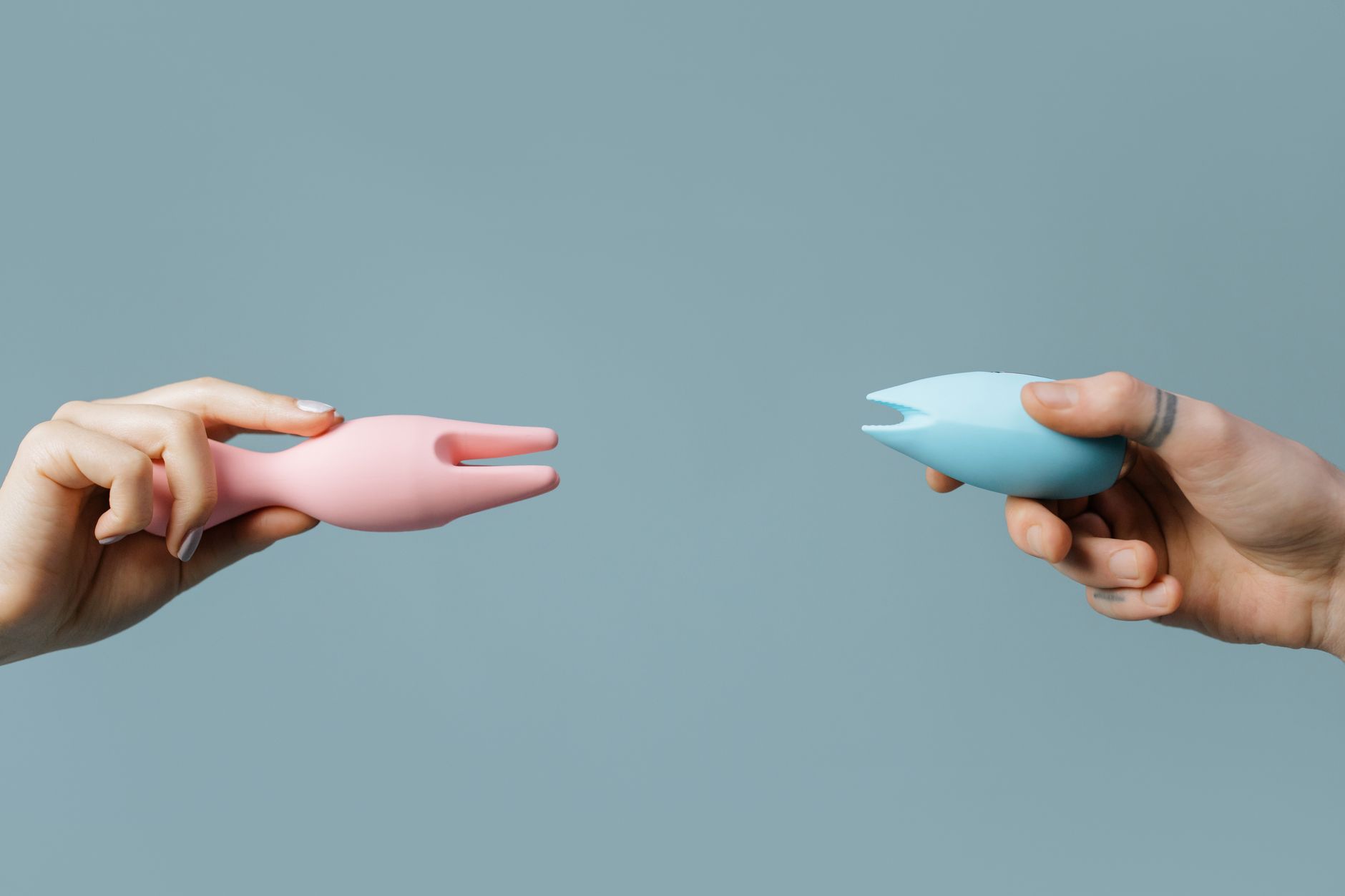
Photo by cottonbro studio on Pexels
When exposure becomes acceptable (or even desired)
Some people move through this. They start uncomfortable being watched, build trust through negotiation, and eventually find that vulnerability becomes erotic in its own right. That's possible. But it's not the goal, and it's not required.
The goal is that you and your partner both have pleasure that feels good to you. If that means they watch from across the room instead of close up, that's fine. If it means they never watch, that's also fine. If it means you use your lemon vibrator alone sometimes and with them present other times, that's a perfectly healthy variation.
What matters is that you're not using your vibrator while simultaneously abandoning your own comfort. That's not intimacy. That's performance. And you deserve better than that.
Real vulnerability is not about being seen. It's about being safe enough to let someone be close while you're in the middle of something that requires your full attention.
The parallel with other intimacy friction
This specific anxiety—being watched during solo pleasure—often exists alongside other relationship friction. If you're also experiencing pressure around timing or rushing during sex, or if being watched triggers similar self-consciousness, those threads are connected. They usually come from the same place: a nervous system that doesn't feel fully safe. Worth exploring with a therapist who specializes in couples work.
Similarly, some people find that using a lemon vibrator with a partner feels easier when you've first rebuilt comfort with one alone. Solo practice isn't always about solitude. It's about building a relationship with your own pleasure that's stable enough to share.
What comes next
Have the conversation. Be specific about what exposure feels like in your body. Ask your partner what they actually need. Listen. Then negotiate something that lets you both feel close without asking you to evaporate.
You might find that a little boundary actually creates more intimacy than forced openness ever could. That's not a quirk. That's how nervous systems work.
People also ask
Can I use a lemon vibrator with my partner if I have anxiety about being watched?
Absolutely. The key is restructuring the scenario so you're not performing. Dim lighting, parallel self-pleasure, physical touch with boundaries, or slowed integration over time all work. Your comfort is not negotiable. The method of closeness is flexible.
How do I tell my partner that being watched makes me feel self-conscious without hurting their feelings?
Use "I" statements and separate their desire from your discomfort. "I feel exposed when I'm watched, and that shuts down my pleasure" is different from "You make me feel judged." The first is about your nervous system. The second sounds like blame. They're much more likely to problem-solve with you on the first one.
Does being uncomfortable with being watched mean something is wrong with our relationship?
No. Plenty of healthy couples have this exact dynamic. What matters is whether you can talk about it and find a compromise that works. If one person insists on being watched at the cost of the other's comfort, that's a relationship issue. The watching itself isn't the problem.
Can I eventually become comfortable being watched if I keep pushing through the discomfort?
Sometimes. But not always, and forcing it often backfires. Some nervous systems are wired to feel exposed during solo pleasure. That's okay. You can build tolerance gradually, but you shouldn't white-knuckle through discomfort in hopes that it'll pass. That usually just teaches your body to associate vulnerability with threat.
What if my partner gets frustrated that I don't want to be watched?
That's a conversation worth having, ideally with a therapist present. A partner's frustration about your boundaries is information. It might mean they don't fully understand why you need the boundary. Or it might mean they value something more than they value your comfort. Both are important to know.
Are there specific features of a lemon vibrator that help when you feel self-conscious?
Clitoral vibrators that are rechargeable and quiet tend to reduce anxiety. If you're nervous about sound or about the device failing, those worries layer onto the exposure anxiety. A reliable lemon clitoral vibrator lets you focus on sensation instead of logistics. The lemon vibrator's suction technology is particularly subtle from a visual standpoint, which some people find less exposing than wand-style vibrators.
Your pleasure isn't a spectator sport. If your partner wants closeness during self-pleasure, there are ways to build that. But none of them require you to sacrifice your actual comfort. Start there. Everything else follows.