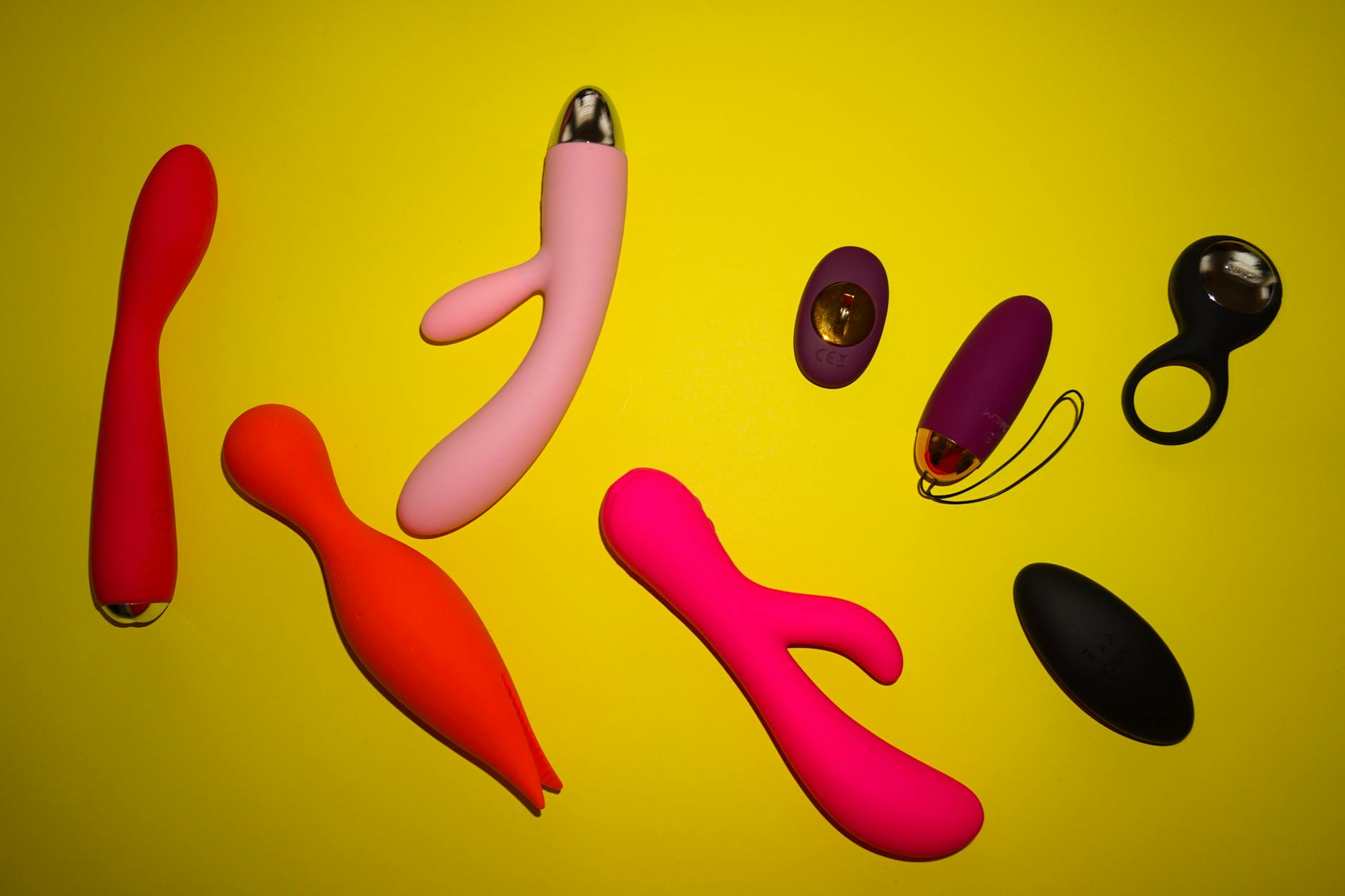
Here's the actual dynamic
Your partner leans in. You're genuinely interested. But your body's still catching up. The gap between their readiness and yours isn't a problem to solve or a sign of mismatch. It's biological, completely normal, and honestly, the place where a lot of couples either connect more deeply or accidentally build resentment.
The thing is, the traditional approach to this gap makes it weird for everyone. Either you rush your warm-up (which doesn't work and leaves you frustrated), or your partner waits (which builds tension and feels like rejection on their end). Neither is actually sexy. A lemon vibrator changes the dynamic entirely because it lets you both do something together that actually feels good instead of one person managing the other's timeline.
Why warm-up time is longer than you might think
First, let's get specific about what's actually happening physiologically. Arousal isn't a single switch. It's a cascade of things: mental focus (which means setting aside the grocery list, the work email, the thing your kid said), blood flow, lubrication, sensitivity building. Women typically need 10 to 20 minutes of focused stimulation to reach the same level of arousal men can reach in two to three minutes. That's not a flaw. That's the baseline.
Add relationship reality on top: you might be tired, stressed, or touched-out from the day. Your partner might have initiated in the evening when you're running on fumes. The mismatch in timing doesn't mean anything is wrong with you or the relationship. It means you're both human with different nervous systems and different days.
The problem isn't the gap. The problem is pretending it doesn't exist and trying to override it.
How lemon vibrators solve the initiation puzzle
When your partner initiates and you're interested but not there yet, a lemon vibrator does three critical things:
First, it makes warm-up an activity you do together instead of something your partner watches you do. There's a huge difference. When your partner can touch you, kiss you, or engage with the toy alongside you, the warm-up stops feeling like foreplay to reach sex and starts feeling like sex itself. The pressure dissolves.
Second, it accelerates your arousal predictably. Lemon vibrators like the Lemon Clitoral Vibrator work through suction and pulsing patterns that build sensation quickly without feeling aggressive. You can start at a lower intensity and rhythm, feel the effect immediately, and escalate your arousal on an actual timeline instead of trying to will it faster.
Third, it gives your partner something to do with intention instead of just waiting. A lot of the tension in this moment comes from your partner feeling helpless or rejected. When you say "I want you, I just need a few minutes," but then those minutes involve them doing nothing, it reads as distance even though that wasn't the intent. A vibrator gives them a role that's active and collaborative.
Read more on how to navigate how to use lemon vibrators when arousal feels slow to build for additional strategies.
The practical choreography that actually works
This isn't complicated, but it does need a framework so it doesn't feel improvised or awkward.
Step one: name it in the moment without apology. "I'm into this, and I want a few minutes to catch up." Full stop. No over-explanation, no "sorry," no pretending you're more ready than you are. Your partner initiated. You're responding honestly. That's healthy communication.
Step two: introduce the tool as part of connection, not a workaround. Pulling out a Lemon vibrator doesn't mean "I'm going solo now." It means "Let's do this together." You might hold it yourself while your partner kisses you and touches you in other ways. Or your partner can hold it while you guide the intensity. The framing is collaboration.
Step three: let sensation build at the right pace. Start with the lower vibration patterns. Most lemon sexual toys have multiple intensity levels. Use them. Your arousal doesn't go in one direction. Some minutes you'll want more, some you'll want gentler. Your partner being able to follow that rhythm is part of what makes this work.
Step four: transition when you're actually ready. This isn't a fixed timeline. Sometimes warm-up takes five minutes. Sometimes ten. When you feel ready to shift, say it. "I'm there. Let's move into this." And the vibrator becomes part of partnered play instead of the warm-up tool.
The time you spent using the vibrator together isn't wasted time. It's not preliminary. It's the beginning of what's happening.
What changes when you frame it this way
I work with a lot of couples where this specific dynamic shows up, and I see the same pattern: the moment partners stop thinking of the warm-up gap as a problem and start thinking of it as a reason to collaborate, everything shifts. Your partner stops feeling rejected. You stop feeling rushed. The vibrator stops feeling like a crutch and starts feeling like an intentional choice that both of you want to include.
One more thing: if your partner has always been frustrated with your warm-up time, this is information they've been sitting with, probably uncomfortably. Offering a solution that makes the time feel good for both of you isn't about fixing yourself. It's about rebuilding trust that you're both trying to meet each other.
Communication before you actually try it
If this is new territory for you two, have a conversation outside the bedroom first. Not framing it as a problem. Framing it as an idea you want to explore together. "I've been thinking about how we could make warm-up time feel better for both of us." You're inviting collaboration, not apologizing for your body.
Talk about what appeals to you both. Does your partner want to hold the lemon vibrator? Do you want to guide the intensity? Is there a particular moment in your typical warm-up when this would feel most natural? Knowing these things in advance removes the awkwardness in the moment.
You might also explore how to use lemon vibrators for partnered play without feeling exposed if vulnerability around using a toy with your partner is part of the hesitation.
The longer pattern this creates
When you normalize lemon vibrators as part of partnered sex, something else happens: you both get more comfortable with direct communication about what feels good. If your partner can ask "Do you want me to hold the vibrator or do you want to?" they're also comfortable asking "What pattern feels best right now?" They've crossed over from shame about asking into genuine curiosity about your pleasure.
That's the real win. The vibrator is the tool. The permission to slow down and collaborate is the shift.
FAQ
How do I bring this up without making my partner feel like I'm rejecting their initiation?
Frame it as an addition, not a detour. "I want us to try using a lemon vibrator during warm-up because I think it'll feel good for both of us." You're not saying "I don't want you." You're saying "Here's something that might make this better." Lead with curiosity, not apology.
What if my partner thinks a vibrator means they're not enough?
This is about timing, not about them. Your body has a warm-up timeline independent of their skills or attractiveness. Reframe it: "This helps me get to the place where I can fully enjoy you." It's not a replacement for them. It's a bridge to more pleasure together.
Can I use lemon vibrators if I'm on medication that slows arousal?
Yes. Lemon clitoral vibrators bypass some of the neurological delays that medications can create. They work through direct stimulation. If medication has genuinely dampened your arousal, that's worth discussing with your doctor, but a vibrator can be a helpful tool in the meantime. See our guide on how to use lemon vibrators when you have low libido from birth control.
Should I use lubrication with a lemon vibrator during partnered warm-up?
Yes, always. Even if you're generating lubrication naturally, a water-based lube makes the sensation feel richer and protects your tissue. It's another signal that you're preparing your body for pleasure, not rushing through a step.
What if my partner initiates and I'm genuinely not interested, not just slow to warm up?
That's different, and it requires that conversation to happen outside the moment. "I've noticed that sometimes you initiate when I'm not feeling it." A vibrator isn't going to manufacture desire that isn't there. If the issue is frequency mismatch or desire discrepancy, how to use lemon vibrators when your partner wants in but you prefer solo play addresses a related dynamic, but it's worth working on the baseline communication first.
How long should warm-up actually take?
As long as it needs to. There's no right answer. Some days you'll be ready in five minutes. Some days it'll be fifteen. The goal is to stop timing it and start paying attention to what your body actually needs. That's the whole point of slowing down.
The real shift
Using lemon vibrators when your partner initiates but you need warm-up time isn't about managing a gap. It's about treating that gap as valuable time to deepen connection instead of an inconvenience to get through. When both of you show up with that intention, everything changes. Your partner stops feeling like they're waiting. You stop feeling rushed. And the vibrator becomes what it actually is: a tool that helps you both feel good together.